The Longevity Series
Home The Longevity Check Programs Books The Science Journal Reviews Pricing About Sign in Take the free check
CHAPTER 01 — THE PREMISE

Your last decade
is decided early.

Most people spend their final 10–15 years in decline. That gap is trainable — and the work starts with knowing where you stand.

Take the free check → Watch the film · 60s
{{ stats.checksTaken }}
checks taken
{{ stats.checksWeek }}
Member Member Member
★★★★★{{ stats.ratingLine }}
{{ stats.membersLine }}
"The check showed me in 15 minutes what years of vague advice never did."
Your baseline is waiting.
12 domains · no account needed
Start free →
CHAPTER 02 — THE IDEA

More years.
More good years.

Lifespan is how long you live. Healthspan is how long you live well — capable, sharp, independent.

Longevity is the work of closing the gap between the two. Start early, train the right systems, and compress decline into a handful of years.

Read the science →
THE CURVE, ANIMATED
The gold path keeps capacity high and declines late — the shaded area is the good years you gain.
CHAPTER 03 — THE PATH
Three steps.
One direction.
Measure where you stand, understand what it means, then study the program built to move it.
1
The Check

Twelve domains, forty-nine questions, fifteen minutes. Your baseline, instantly.

Free — start now
2
The Report

Personal, precise, referenced. What your scores mean and where your leverage lies.

{{ reportPrice }} one-time
3
The Programs

Deep study per theme — read, listen, watch — with a weekly practice to apply it.

From {{ programFrom }}
CHAPTER 04 — THE TWELVE DOMAINS
One body.
Twelve systems that decide how you age.

Every domain has its own colour, its own science, its own page — and its own score in your check.

See your baseline →
01
Metabolism
ENERGY · GLUCOSE
02
Sleep
RECOVERY · RHYTHM
03
Cardiovascular
HEART · VO₂
04
Stress & Recovery
NERVOUS SYSTEM
05
Movement & Strength
ACTIVITY · POWER
06
Body Composition
MUSCLE · FAT
07
Nutrition
DIET · TIMING
08
Bone Health
DENSITY · LOAD
09
Inflammation
LIFESTYLE LOAD
10
Hormonal Health
BALANCE
11
Mind & Mood
MENTAL · MOOD
12
Connection
SOCIAL · BELONGING
Each domain is scored on lifestyle factors only — educational, never diagnostic.
PROGRAM SPOTLIGHT — AVAILABLE NOW
The Sleep Program

Master the most powerful recovery process you have. Circadian biology, light, the nervous system, nutrition, environment — concluded with your own measured, personal plan.

7 MODULES · 33 LESSONS · READ · LISTEN · WATCH · {{ programPrice }}
Study the curriculum
CC
WATCH THE TRAILER — 60s
READ
Written to be studied

Every lesson is a carefully written text — the why, the how, then your one concrete step. Optional deep dives for those who want the full science.

LISTEN
Narrated, beautifully

Every lesson comes with a studio-quality narration. Listen on a walk, in the car, or follow along with the text — like a podcast that happens to be a curriculum.

WATCH
Visuals that explain

Short cinematic visual explainers and functional diagrams — the sleeping brain, your light curve, your temperature drop. No talking heads, no filler.

COMING TO THE SERIES
The Library

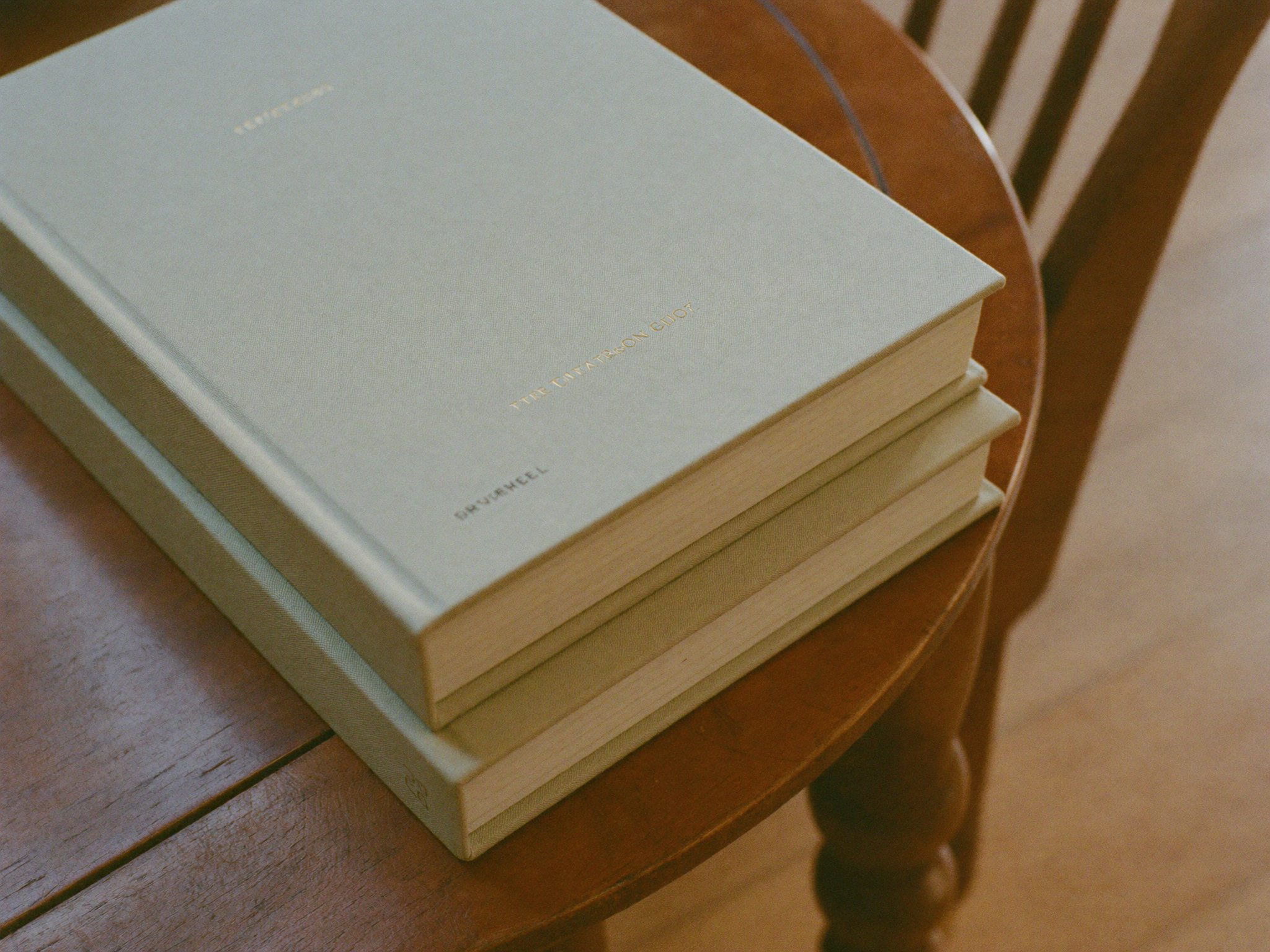
A curated collection of books distilling each program into print — for readers, for gifting, for the shelf. Joining the series in 2027.

See the books →
The Longevity Series books
★★★★★  {{ stats.loved }}
Know where you stand.
Then change where you're headed.

The free check — twelve domains, fifteen minutes, your baseline.

Take the free check — 15 minutes
Free forever · no card required · your data stays yours
The Longevity Series
Home The Longevity Check Programs Books The Science Journal Reviews Pricing About Sign in Take the free check
THE LIBRARY

Books

Each program, distilled into a book — the essential arguments and protocols, edited for reading. Published online, kept current, read in your secure library.

ON SLEEP · THE LONGEVITY SERIES
THE LONGEVITY SERIES
On
Sleep
VOL. IFIRST EDITION
VOL. I · AVAILABLE ONLINE

On Sleep

The Sleep Program as one continuous read: the science of the night in plain language, and the method for a plan that is yours.

What the brain actually does across a night — and why it decides how you age
The handful of levers that genuinely move sleep — light, timing, temperature, mind
A measured, personal plan — built chapter by chapter, honest about what doesn’t work
View editions [CONTENT: prijs boek]
Kindle · watermarked download · member library.
THE SERIES
THE LONGEVITY SERIES
Health
Optimization
COMING SOON
Health Optimization
THE LONGEVITY SERIES
Nutrition
COMING SOON
Nutrition
THE LONGEVITY SERIES
Movement &
Strength
COMING SOON
Movement & Strength
THE LONGEVITY SERIES
Stress &
Recovery
COMING SOON
Stress & Recovery
ONE BOOK, THREE WAYS TO READ
On your Kindle

The Kindle Edition, bought through Amazon — read it on your e-reader or in the Kindle app, like any book you own.

Download & keep

The Digital Edition as PDF + EPUB, yours forever — each copy personally watermarked with your name.

In your member library

Included with membership: always the latest edition, revised as the evidence changes, on every device you sign into.

The Longevity Series
Home The Longevity Check Programs Books The Science Journal Reviews Pricing About Sign in Take the free check
← All books
ON SLEEP · THE LONGEVITY SERIES
THE LONGEVITY SERIES
On
Sleep
VOL. IFIRST EDITION
VOL. I · ONLINE EDITION

On Sleep

The science of the night — and the method for owning yours.

[CONTENT: samenvatting — 2–3 alinea’s boeksamenvatting]

6
CHAPTERS
~4 h
READ TIME
Jul ’26
LAST UPDATED
CHOOSE YOUR EDITION
Kindle Edition

Read on your Kindle or in the Kindle app.

[CONTENT: prijs Kindle]
Buy on Amazon
MOST POPULAR
Digital Edition

PDF + EPUB. Download and keep — personally watermarked with your name.

[CONTENT: prijs download]
Buy & download
Member Library

Included with membership. Always the latest edition, on every device.

INCLUDED
Read in your library
Every digital copy is personally watermarked. Read chapter 1 free
CONTENTS
{{ c.n }}
{{ c.t }}
{{ c.d }}
THE BOOK & THE PROGRAM
THE SLEEP PROGRAM
Guided & interactive

Thirty-three lessons that walk you through the work — film and narrated audio, protocols applied step by step, a baseline week and a measured personal plan.

See the program →
ON SLEEP — THE BOOK
The complete reference

The deeper science in full chapter essays — the material the lessons distil, with complete references and notes. [CONTENT: extra verdieping]

← On Sleep Contents
Secure reader — chapters stream on demand, no downloads
A− A+
ON SLEEP · CONTENTS×
{{ c.n }} {{ c.t }}
Licensed to [READER_NAME] — [READER_EMAIL]
THE LONGEVITY SERIES
On Sleep
Vol. I · First edition
ABOUT THIS EDITION
[CONTENT: colofon — uitgave, editie, herzieningsdatum, rechten, disclaimers]
Published online by The Longevity Series. This edition is revised as the evidence changes. Licensed for on-screen reading in the member library.
Foreword
[CONTENT: voorwoord]
{{ p.chRoman }}
{{ p.chTitle }}
{{ p.chDeck }}
ON SLEEP{{ p.running }}
{{ b.txt }}

{{ b.dropChar }}{{ b.rest }}

{{ b.txt }}

{{ b.txt }}
{{ p.numText }}
References & Notes
[CONTENT: referenties — volledige bronnenlijst en noten per hoofdstuk]
{{ p.numText }}
{{ rdPageLabel }}
This edition is licensed for on-screen reading in the member library and cannot be printed.
Licensed to [READER_NAME] — [READER_EMAIL]
The Longevity Series
HomeThe Longevity CheckProgramsBooksThe ScienceJournalReviewsPricingAboutSign in Take the free check
← ALL PROGRAMS {{ cxProg.statusText }}
{{ cxProg.no }} — {{ cxProg.kicker }}

{{ cxProg.name }}

{{ cxProg.tagline }}

{{ cxProg.intro }}

Enter the course → Preview Lesson 1 — free {{ cxProg.price }}
{{ cxProg.meta }}
{{ cxProg.trailerEl }}
{{ cxProg.imgCap }}
WATCH THE TRAILER — 60s
THE PROMISE

{{ cxProg.promise }}

WHO IT’S FOR
{{ w.t }}
{{ cxProg.whoForNote }}
WHAT YOU’LL LEARN
{{ wl.n }} {{ wl.t }}
WHAT YOU’LL BE ABLE TO DO
{{ oc.n }}
{{ oc.t }}
{{ cxProg.quoteInitial }}
★★★★★
“{{ cxProg.quote }}”
{{ cxProg.quoteWho }} · {{ cxProg.quoteTag }}
WHY THIS WORKS
The evidence this program stands on
{{ p.n }}{{ p.h }}

{{ p.b }}

PARAPHRASED FROM THE PEER-REVIEWED LITERATURE · EVERY LESSON CITES ITS SOURCES
THE CURRICULUM

From first principles
to a personal protocol.

Every lesson follows the house rhythm: the why (science), the how (protocol), then your step — one concrete action. 6–12 minutes, read or listened.
{{ m.rom }}
{{ m.t }}
CHAPTER {{ m.rom }} · {{ m.count }} LESSONS

{{ m.goal }}

{{ l.n }}
{{ l.t }}
{{ l.gist }}
¶♬▷
THIS WEEK {{ m.act }}
THE PRACTICE — INCLUDED
Understanding is half the program. This is the other half.

{{ cxProg.planBand }}

See the weekly template →
INCLUDED · WEARABLE RECOMMENDATIONS
Curated gear picks for this course — the exact models we’d buy, below.
INCLUDED · SUPPLEMENT RECOMMENDATIONS
A short, honest stack — what, why, dose and what to skip, below.
INCLUDED · INTERVENTION RECOMMENDATIONS
Levers beyond habits — heat, cold, light, breath and tests, ranked honestly.
HOW A LESSON WORKS
01The why. The science, in plain language — sourced, never hyped.
02The how. A concrete protocol, scaled to where you are.
03Your step. One action you take this week — nothing more.
READ OR LISTEN

Every lesson is written to be studied and narrated in studio quality — listen on a walk or read at your desk. Functional visuals carry the key concepts; your progress syncs across both.

LAYERED DEPTH

Follow the main line, or open the optional deep dives for the underlying science. Recovery tools — light, heat, cold, HRV — are framed honestly: what they do, for whom, and when they’re not worth it.

GEAR & WEARABLES · OPTIONAL
{{ cxProg.gearHeadline }}
{{ gi.cat }}
{{ gi.name }}

{{ gi.why }}

WORTH IT FOR: {{ gi.worth }}
{{ cxProg.gearNote }}
SUPPLEMENTS · OPTIONAL
{{ cxProg.suppHeadline }}
{{ sl.name }}
{{ sl.label }}

{{ sl.text }}

{{ cxProg.suppNote }}
RECOVERY INTERVENTIONS
The layer above the basics — heat, light and cold, honestly ranked.
{{ ivi.name }} {{ ivi.label }}

{{ ivi.text }}

{{ cxProg.recovNote }}
{{ cxProg.beyond.kicker }}
{{ cxProg.beyond.title }}

{{ cxProg.beyond.intro }}

{{ t.label }} {{ t.badge }}
{{ it.name }}

{{ it.text }}

{{ cxProg.beyond.punchKicker }}

{{ cxProg.beyond.punchLead }}{{ cxProg.beyond.punchStrong1 }}{{ cxProg.beyond.punchMid }}{{ cxProg.beyond.punchStrong2 }}{{ cxProg.beyond.punchTail }}

GEAR & WEARABLES · OPTIONAL
The physical layer — tools that make the practice easier to hold.
CURATION IN PROGRESS

Theory teaches and practice trains — a few well-chosen tools support both. For this course we curate what genuinely helps, when it’s worth the money, and the exact model we’d buy ourselves — available directly from the program.

PRODUCT IMAGE
{{ gi.cat }}{{ gi.n }}
{{ gi.name }}

{{ gi.why }}

[ OUR PICK — TO BE ANNOUNCED ]
Nothing here is required — every protocol works without equipment. We only list what we’d buy ourselves, and we say so when something isn’t worth it.
RECOMMENDED SUPPLEMENTS · OPTIONAL
A short, honest stack — nothing you don’t need.
BEING FINALISED

Supplements are the smallest lever in this course — behaviour always comes first. Alongside the lessons you’ll find a short, curated list for this program: what, why, dose, timing — and just as important, what to skip.

{{ sl.cat }}{{ sl.n }}
[ SUPPLEMENT — TO BE ANNOUNCED ]

{{ sl.note }}

Never required — food and behaviour first. Discuss anything you take with your own doctor or pharmacist, especially alongside medication.
RECOMMENDED INTERVENTIONS · OPTIONAL
Beyond daily habits — the bigger levers, honestly ranked.
BEING CURATED

Some levers sit outside the daily lessons — heat, cold, light, breathwork, tests and clinical conversations. For this course we rank which are worth your time, what the evidence actually supports, and what to leave alone.

{{ ivi.cat }}{{ ivi.n }}
[ INTERVENTION — TO BE ANNOUNCED ]

{{ ivi.note }}

Bigger levers deserve bigger honesty — each comes with dose, frequency and who it’s not for. Clinical steps always run through your own doctor.
WHAT IT ISN’T
{{ wi.t }}
PRICING
{{ cxProg.price }}
ALL-ACCESS {{ cxProg.priceAll }}
Start the program →
A note on safety. {{ cxProg.safety }}
{{ cxProg.statusText }}
Start today.

Every lesson is written and open. Series members receive every program as it releases, at no extra cost — founding pricing carries over.

Enter the course →
← {{ cxProg.prevName }} {{ cxProg.nextName }} →
← All programs
{{ cxRead.progName }}
{{ cxRead.progressLabel }}
{{ m.rom }} {{ m.title }} {{ m.icon }}
{{ l.code }} {{ l.title }}
{{ cxRead.introNum }}

{{ cxRead.introTitle }}

{{ cxRead.introGoal }}

THIS WEEK {{ cxRead.introWeek }}
{{ cxRead.introLessonsLabel }}
{{ l.code }}
{{ l.title }}
{{ l.sub }}
{{ cxRead.modLabel }}

{{ cxRead.title }}

{{ cxRead.subtitle }}
{{ cxRead.audioTopEl }}

{{ b.h }}

{{ b.p }}

{{ cxRead.figureEl }}
{{ cxRead.protocol.title }}
{{ r.label }} {{ r.text }}
{{ cxRead.objTitle }}
{{ cxRead.audioObjectionsEl }}
{{ o.q }} {{ o.icon }}

{{ o.a }}

WHAT TO EXPECT

{{ b.p }}

THE EVIDENCE {{ cxRead.evStrength }}
{{ cxRead.audioEvidenceEl }}

{{ b.p }}

HONEST CAVEAT

{{ b.p }}

◆ DEEP DIVE{{ cxRead.deepTitle }}
{{ cxRead.deepIcon }}
{{ b.h }}

{{ b.p }}

YOUR STEP — THIS WEEK
{{ cxRead.audioStepEl }}

{{ b.p }}

{{ cxRead.completeLabel }}
← PREVIOUS
{{ cxRead.prevTitle }}
NEXT →
{{ cxRead.nextTitle }}
The Longevity Series
Home The Longevity Check Programs Books The Science Journal Reviews Pricing About Sign in Take the free check
THE JOURNAL

One clear idea
at a time.

Evidence first, hype never. Written by our studio, fact-checked and edited before anything goes live.

{{ jCount }}
{{ c.label }}
{{ jFeat.cat }} LATEST
{{ jFeat.domName }}  ·  {{ jFeat.date }}  ·  {{ jFeat.meta }}
{{ jFeat.title }}

{{ jFeat.excerpt }}

Read it →
{{ jGridLabel }}
PODCAST
{{ a.cat }}
[CONTENT: beeld] {{ a.cat }}
{{ a.domName }}  ·  {{ a.date }}
{{ a.title }}

{{ a.excerpt }}

{{ a.meta }}
{{ a.dateShort }} {{ a.cat }} {{ a.title }} — {{ a.excerpt }} {{ a.meta }}
Load more
ARCHIVE {{ m.label }}
Read tomorrow’s idea with your own baseline in hand.

The free check scores all twelve domains in about fifteen minutes.

Take the free check →
The Longevity Series
Home The Longevity Check Programs Books The Science Journal Reviews Pricing About Sign in Take the free check
{{ art.domName }}  ·  {{ art.date }}  ·  {{ art.meta }}

{{ art.title }}

{{ art.dek }}

LS
The Longevity Series editorial studio
DRAFTED WITH AI RESEARCH TOOLING · FACT-CHECKED & EDITED BEFORE PUBLISH
{{ art.cat }}
{{ art.mark }}
{{ art.ep }} · {{ art.fmt }}
Narrated by {{ art.voice }} — a studio voice, rendered with ElevenLabs.
{{ art.tLabel }}
{{ art.dur }}
CHAPTERS
{{ c.t }} {{ c.c }}
SHOW NOTES

{{ n.p }}

FROM THE TRANSCRIPT
{{ t.who }}

“{{ t.line }}”

{{ b.p }}

{{ b.p }}

{{ b.p }}

{{ b.p }}

“{{ art.quote }}”
TAKE THESE WITH YOU
{{ t.n }}{{ t.t }}
SOURCES
{{ s.t }}
Put today’s idea next to your own numbers.
The free check scores this domain — and eleven others — in fifteen minutes.
Take the free check
KEEP READING
{{ r.domName }}  ·  {{ r.meta }}
{{ r.title }}
Educational content, not medical advice. Always discuss health concerns with your physician.
The Longevity Series
Home The Longevity Check Programs Books The Science Journal Reviews Pricing About Sign in Take the free check
PRICING

Start free. Go as deep as you like.

Everyone begins with the free check. Add your personal report when you want depth, and subscribe to a program — or the whole series — when you’re ready to go further.

Monthly YearlyBEST VALUE
€ EUR $ USD
THE CHECK
Longevity Check
Free
No account, no card
49 questions · 12 domains
Overall baseline score
Per-domain score bars
Start the check
ONE-TIME
Personal Report
{{ reportPrice }}once
Yours to keep
In-depth analysis, all 12 domains
Your heaviest factors, named
Evidence-based first steps
Start with the check
ONE PROGRAM
One Program
{{ sleepBig }}{{ sleepUnit }}
{{ sleepNote }}
{{ sleepSave }}
7 modules · 33 lessons
Narration + visual explainers
Your personal program plan
Cancel anytime
Browse the programs
FOUNDING · BEST VALUE
EVERYTHING
Series Membership
{{ memBig }}{{ memUnit }}
{{ memNote }}
{{ memSave }}
All fourteen programs included
All new programs as they launch
Report updates when you retake
Founding rate, locked while you stay
Become a member
Every program is included in membership — take one program, or get the whole series for {{ memberPriceInline }}.
30-day guarantee
Not what you expected? Full refund within 30 days of your first purchase.
Cancel anytime
Memberships run month-to-month or yearly. Stop whenever you like — no lock-in.
Educational, always
Content is educational — never medical advice. Consult a physician for medical concerns.
The Longevity Series
Home The Longevity Check Programs Books The Science Journal Reviews Pricing About Sign in Take the free check
ABOUT

The last ten years of a life should be worth living.
We teach what makes them so.

The Longevity Series is an education company. We take what the research actually shows about how people age — and what can be done about it — and we teach it plainly, to people who are not scientists.

WHY WE EXIST

The decade nobody plans for.

Most people, in wealthy countries, will spend the last ten to fifteen years of their life in decline. Not dying — declining. Losing strength, losing independence, losing the things that made the years worth having. Globally the gap between how long we live and how long we live well is about 9.6 years. In the United States it is 12.4.

That gap is not fate. A substantial part of it is trainable, and most of what moves it is unglamorous, cheap and available to anyone. Almost nobody is taught it. That is the entire reason this company exists.

Garmany & Terzic, JAMA Network Open, 2024 — 183 countries.
WHAT WE ARE
{{ c.t }}

{{ c.b }}

HOW WE HANDLE EVIDENCE

Our standard for evidence.

Most health content fails in one of two directions. It either sells you things the research does not support, or it dismisses anything that has not yet been through a decade of trials. We try to do neither, and it is harder than it sounds.

{{ e.n }}{{ e.t }}

{{ e.b }}

WHAT WE DON’T DO

What we will never do.

{{ r.t }}

{{ r.b }}

None of this is virtue. It is simply what it costs to be worth reading.
HOW IT WORKS

How to use this.

{{ s.n }}
{{ s.t }}

{{ s.b }}

Take the check →
OUR PUBLIC WORK
{{ w.t }}

{{ w.b }}

{{ w.link }}
WHO WE ARE

The company.

The Longevity Series is published by Longevity & Performance B.V., a company registered in the Netherlands. We are a small team of writers, researchers and clinicians-by-training, and our editorial decisions are made by the people who write the lessons — not by a marketing department, because there isn’t one.

CONTACThello@longevity-series.com
AN IMPORTANT LIMIT

Everything on this site is educational. It is not medical advice, it does not create a doctor-patient relationship, and it cannot account for your history, your medication or your risks. If you have symptoms, a diagnosis, or you are considering stopping or starting a treatment, that conversation belongs with a physician who can examine you. We will say this often, and we mean it every time.

Start with the free check.

Fifteen minutes. Twelve domains. No account, no card.

Take the Longevity Check →
The Longevity Series
Home The Longevity Check Programs Books The Science Journal Reviews Pricing About Sign in Take the free check
← The Science
{{ sci.kicker }}

{{ sci.title }}

{{ sci.dek }}

IN THIS SERIES {{ rl.n }}{{ rl.title }}
{{ stt.v }}
{{ stt.l }}
{{ sci.figTitle }}
FIG. 01
{{ bar.label }}{{ bar.val }}
{{ stp.n }}
{{ stp.label }}
{{ stp.sub }}
{{ sci.gapTopLabel }}
{{ sci.gapBotLabel }}
{{ sci.gapNote }}
{{ col.head }}
{{ col.mark }}{{ it.t }}
{{ sci.figNote }}

{{ b.text }}

{{ b.text }}

{{ b.text }}

{{ b.text }}

{{ sci.frameTitle }}
{{ f.n }}
{{ f.t }}
{{ f.d }}
THE COMMON MISTAKE
“{{ sci.mythClaim }}”
WHAT THE EVIDENCE SAYS
{{ sci.mythReality }}
{{ sci.pointsTitle }}
{{ r.label }}{{ r.text }}
WHAT YOU CAN DO
{{ s.n }}{{ s.t }}
{{ sci.relatedLabel }} Go →
← {{ sci.prevTitle }} {{ sci.nextTitle }} →
See where you stand today.

The free check scores all twelve domains in about fifteen minutes.

Take the free check
The Longevity Series
Home The Longevity Check Programs Books The Science Journal Reviews Pricing About Sign in Take the free check
MEMBER REVIEWS

Loved by people building
more good years.

{{ stats.rating }}
★★★★★
Based on {{ stats.reviewsCount }} verified member reviews. {{ stats.recommendPct }} would recommend the Series to a friend.
{{ d.n }}
{{ d.pct }}
{{ stats.checksRoundedNum }}+
FREE CHECKS TAKEN
{{ stats.membersNum }}+
MEMBERS ENROLLED
96%
WOULD RECOMMEND
40+
COUNTRIES
FEATURED STORIES
{{ r.starsStr }}
{{ r.title }}

{{ r.body }}

{{ r.initials }}
{{ r.name }}
{{ r.meta }}
What members are saying
{{ reviews.count }} reviews shown
{{ c.label }}
{{ r.starsStr }} {{ r.date }}
{{ r.title }}

{{ r.body }}

{{ r.initials }}
{{ r.name }}
{{ r.meta }}
{{ r.tag }} ✓ Verified member
VERIFIED
Real members only

Every review is left by someone with an active account who has taken the check or a program. No purchased reviews, ever.

UNINCENTIVISED
Nothing bought, nothing hidden

We don’t offer discounts or perks for reviews, and we publish the critical ones alongside the glowing. The rating you see is the rating members gave.

HONEST BY DESIGN
Educational, never diagnostic

Members trust the Series because it never sells fear or overpromises — and says plainly when a doctor, not a course, is what you need.

★★★★★  {{ stats.ratingBand }}
Join the people already ahead.

Start with the free check. Twelve domains, fifteen minutes, your baseline.

Take the free check
No card required · instant baseline score
The Longevity Series
Home The Longevity Check Programs Books The Science Journal Reviews Pricing About Sign in Take the free check
A FREE 5-DAY EMAIL COURSE

Your last decade.

For most people, the final ten to fifteen years are years of decline. Five short emails on why that happens, why it isn’t fixed — and exactly where to start changing it.

Start the free course
One email a day for five days. No spam — unsubscribe anytime.
You’re in — Day One lands in your inbox shortly.
WHAT THE FIVE DAYS COVER
{{ d.n }}
{{ d.title }}
{{ d.teaser }}
More years. More good years.

That’s the whole idea — the five-day course is the easiest way in.

Start free
Or take the free check now →
The Longevity Series
Home The Longevity Check Programs Books The Science Journal Reviews Pricing About Sign in Take the free check
THE SCIENCE OF LONGEVITY

More years — and
more good years.

Longevity isn’t about chasing endless time. It’s about how much of your life you spend strong, sharp and independent — the years before decline sets in. Here’s what that means, and what actually moves it.

See where you stand → Explore the programs
12
DOMAINS MEASURED
8
EVIDENCE-BASED LEVERS
4
SLOW DISEASES TARGETED
200+
STUDIES REVIEWED
HOW WE WORK

One method, repeated in every program.

01
Understand

Build an accurate model first — you can’t fix a system you don’t understand.

02
Measure

Find where you actually stand — measured, not remembered. That’s the free check.

03
Adjust

Pull the levers that matter, in order of leverage — not the ones easiest to buy.

04
Sustain

Make it survive a busy week, a holiday, a bad month — that’s where results live.

01 — TWO DIFFERENT THINGS

You have two lifespans.
Only one gets measured.

Lifespan is how long you live. Healthspan is how long you live well — the years before decline sets in across the things that matter most: your body, your mind and your mood. Most of medicine tracks the first number. Longevity is about closing the gap between them.

Three roads: no intervention, conventional care, and proactive longevity. The gold path keeps capacity high and declines late — the shaded area is the difference, the good years you gain.
02 — THE PART WORTH FIGHTING FOR

The goal isn’t a longer decline.
It’s a shorter one.

Two people can reach the same age by very different roads. One coasts down a long, slow slope for decades. The other stays near the top — active, capable, themselves — and then declines quickly and late.

The shaded area on the chart is the prize: the extra years lived in good health.

We’d rather add life to your years than only years to your life.
03 — WHY THE APPROACH IS CHANGING

From reacting to disease,
to preventing it.

Modern medicine is one of humanity’s great achievements — and it is built for a particular kind of problem. If you break a leg, catch pneumonia or have a heart attack, the system moves fast and works brilliantly. Deaths from infection and injury have collapsed over the past century. That is the medicine most of us grew up trusting, and it deserves that trust.

But the diseases that now end most lives don’t behave like broken legs. Heart disease, cancer, dementia and type 2 diabetes build silently for twenty, thirty, forty years before a diagnosis. The first chest pain is not the beginning of the disease — it is closer to the end of a long, quiet process. A system designed to respond to events will, by its nature, arrive late to processes.

You can see the mismatch in ordinary care. A standard check-up asks whether you have a disease today — not how fast you are moving toward one. A cholesterol panel is judged “normal for your age” rather than optimal for your future. Blood sugar has to cross a diagnostic line before it becomes anyone’s problem, even though the damage of insulin resistance starts years earlier. None of this is anyone’s failure; it is what the system was built to do.

The opportunity — and it is genuinely new — is that the slow diseases are the ones most open to influence. Because they take decades to build, decades are available in which to change their course. That is what proactive medicine, and this platform, are about: understanding the processes early, measuring where you stand, and steering while steering is still cheap.

A short history — from trial and error to today →
04 — TWO KINDS OF MEDICINE

Acute care and
proactive medicine.

Not rivals — two halves of one whole. One rescues you on your worst day; the other works on the ten thousand ordinary days before it.

ACUTE CARE
Brilliant in a crisis

Trauma surgery. Antibiotics for a raging infection. A catheter opening a blocked artery within the golden hour. This is medicine at its most heroic, and nothing on this platform substitutes for any of it.

Its logic is the event: something breaks, medicine responds, and the response saves lives every single day. Its structural limit is timing — it can only act once there is something to react to.

Read more →
PROACTIVE MEDICINE
Working decades earlier

The complement, not the replacement: attend to the decades before the event. Know your risk factors early. Track the markers that predict the four slow diseases. Build the physical reserve — fitness, strength, metabolic health — that decides how you weather everything else.

Its logic is the trajectory: risk compounds quietly, so small early corrections beat large late ones. Most of the work is education and habit — which is why it can start today, without a prescription.

Read more →
05 — THE FOUR THAT MATTER MOST

Four slow diseases cause
most of the decline.

Nearly all of us, if we live long enough, are eventually limited by one of four groups of chronic disease. They build quietly over decades — which is exactly why early action works so well.

Cardiovascular disease

Atherosclerosis: cholesterol-carrying particles lodge in artery walls and build plaque over decades, until a rupture causes a heart attack or stroke. It remains the world’s leading cause of death — and it starts far earlier than most people assume; early plaques are found in people in their twenties.

It costs good years twice over: suddenly, through heart attack and stroke, and slowly, as stiffened vessels and a weakened heart shrink what you can do long before any event.

The evidence for prevention here is the strongest of the four. Blood pressure, LDL cholesterol, smoking, fitness and body composition each move risk substantially — and all five are measurable and trainable.

Honest note: lifestyle lowers risk substantially but not to zero — genetics matter too, which is why knowing your numbers belongs next to training.
Read the full explainer →
Cancer

Not one disease but hundreds: cells accumulate mutations, escape their normal controls and grow where they shouldn’t. Risk climbs steeply with age because mutations accumulate with time.

It is the second-largest cause of death, and treatment — even when successful — often takes a lasting toll on energy, strength and function. The years around a diagnosis are rarely fully returned.

Prevention here is real but partial: not smoking, keeping metabolic health (obesity and insulin resistance are linked to more than a dozen cancers), limiting alcohol, and — above all — screening. Early detection changes survival more than almost anything else you control.

Honest note: a meaningful share of cancer is bad luck that no lifestyle prevents. What you control is risk reduction and how early it’s found — not certainty.
Read the full explainer →
Neurodegenerative disease

Alzheimer’s and related dementias: proteins misfold and accumulate, synapses fail, and cognition erodes. The process begins fifteen to twenty years before the first symptom.

It is the disease people fear most, because it takes the person before it takes the body — years of dependence, for the patient and for the family. Per case, it costs more good years than almost anything else.

There is no proven cure, but risk is genuinely modifiable: what protects the heart protects the brain. Exercise is the strongest known lever; hearing care, sleep, blood pressure, metabolic health and social connection all show meaningful associations in long-term studies.

Honest note: the evidence here is largely observational — strong enough to act on, too weak for promises. Anyone selling dementia prevention as a certainty is overselling.
Read the full explainer →
Metabolic disease

Insulin resistance sliding toward type 2 diabetes: cells stop responding properly to insulin, blood sugar and fat handling deteriorate, and the liver quietly accumulates fat. Most people live with it unknowingly for a decade or more.

On its own it erodes energy and function — but its real cost is as an accelerant: poor metabolic health measurably raises the risk of all three diseases above. It is the multiplier.

It is also the most reversible of the four. Muscle is the body’s largest consumer of glucose, so strength and aerobic work act directly on the mechanism; diet quality, sleep and body composition do the rest. Remission of early type 2 diabetes through lifestyle change is documented in controlled trials.

Honest note: reversibility fades as the disease progresses — which is the whole argument for acting on early signals rather than the diagnosis.
Read the full explainer →
06 — THE LEVERS

A shortlist does
most of the work.

There is no secret pill, and there are no forty things to do. Across decades of research the same handful of levers keeps carrying the result — and one of them stands above the rest. In large cohort studies, moving from low to even moderate cardiorespiratory fitness is associated with a reduction in all-cause mortality that no medication matches. Exercise is not one health tip among many; it is the closest thing to a longevity intervention we have.

We break it into four trainable capacities. None requires an athletic history; all are buildable at any age, and each protects something distinct about your last decades.

EXERCISE — THE FOUR PILLARS
01Aerobic base

Long, easy, conversational-pace work — the kind you could sustain while talking. It builds the mitochondria and fat-burning machinery everything else runs on, and it is the foundation of metabolic health: an engine that clears glucose and fat efficiently, even at rest.

It is unglamorous, and it is the highest-volume item on the list — which is exactly why it works. The dose that shows up in the research is roughly three to four hours a week, built up gradually over months.

In practice: brisk walking, cycling, rowing or easy running, 3–4 sessions a week, at a pace where full sentences are still possible.
02Peak output — VO₂ max

The ceiling of what your heart, lungs and muscles can deliver at full effort. In long-term cohort data it is one of the strongest single predictors of lifespan we know of — in some analyses stronger than smoking status — because daily life keeps demanding a fixed amount of it while your ceiling falls with age.

The stairs that wind you at fifty are the stairs you cannot climb at eighty — unless the ceiling is raised. It is trained with short, hard intervals: a few minutes near your limit, repeated, once or twice a week, on top of a solid base.

In practice: one weekly session such as 4 × 4 minutes hard with easy recoveries — measured against your own numbers, no one else’s.
03Strength

Muscle is not cosmetic tissue; it is the organ of independence and the body’s largest glucose sink. From mid-life onward you lose it steadily unless you actively keep it — and grip strength, a simple proxy, tracks with mortality across dozens of large studies.

Everything you want to still be doing at eighty — carrying groceries, rising from a low chair, catching yourself on a kerb — is a strength act. The evidence supports two to three sessions of progressive resistance work a week, at any starting level; trials show meaningful gains even in people in their nineties.

In practice: squat, hinge, push, pull, carry — loaded a little more over time. The program matters less than the progression.
04Stability

Balance, coordination and control: the capacity that decides whether the other three stay usable. Falls are a leading cause of injury death past seventy-five, and a broken hip is one of the sharpest turning points a healthspan can take — the year after one is often the year independence ends.

Stability is also what lets you train hard without injury: control first, load second. It responds quickly — balance and mobility work measurably reduces fall risk in trials — and it costs minutes a day, not hours.

In practice: single-leg work, controlled ranges, a little every day — the quiet ten minutes that protect the loud hours.
FOUR MORE LEVERS
Nutrition

The most argued-about lever, and the one where honest evidence is least dogmatic. What survives scrutiny is unglamorous: adequate protein (more than most people eat, especially past fifty), mostly unprocessed food, energy intake matched to need, and blood sugar that doesn’t ride a rollercoaster all day. No named diet consistently beats those fundamentals in trials.

The right pattern is personal — driven by your metabolic numbers, your preferences and your life — which is why we teach principles and measurement rather than rules.

Going deeper? See the Nutrition program in the library →
Sleep

The recovery window every other lever depends on. Chronically short or broken sleep measurably worsens insulin sensitivity, blood pressure, appetite regulation, mood and memory — all four slow diseases touch it.

It is also highly trainable: consistent timing, morning light, a cool dark room and a protected wind-down move most people further than any supplement. And for chronic insomnia, CBT-I — not medication — is what every major guideline recommends first.

Going deeper on sleep? See The Sleep Program →
Emotional health

The pillar most longevity plans skip — and by some of the longest-running cohort evidence we have, among the most decisive. The quality of relationships in mid-life predicts late-life health and satisfaction remarkably well; loneliness carries a risk burden comparable to established physical risk factors.

This is not soft advice bolted onto a hard-science platform. Purpose, connection and mental health decide whether long years are worth having — and they respond to deliberate work, just as fitness does.

Explored in Mind, Mood & Connection — see the programs →
Know your numbers

You cannot steer what you do not measure. A short panel — blood pressure, LDL cholesterol, fasting glucose and HbA1c, plus body composition and a fitness marker — tells you more about your next twenty years than any wearable score.

The point is not data for its own sake: it is finding your personal leverage early, tracking whether what you do actually works, and bringing better questions to your physician. Measured, not guessed — that is the whole method.

This is exactly what the free check maps — twelve domains, fifteen minutes →
07 — HOW WE WEIGH EVIDENCE

We’ll tell you what
doesn’t work, too.

Most of this industry sells hope. We grade every intervention on the strength of the actual evidence — and we say so plainly when something popular, expensive or well-marketed simply doesn’t hold up. That honesty is the whole point.

STRONG
Do these first

Large, repeated, well-controlled evidence. Movement, sleep regularity, morning light, strength. The unglamorous things that actually move healthspan.

MODERATE
Reasonable to try

Promising but smaller or mixed evidence, or useful only for some people. Worth an honest personal experiment — measured against your own baseline.

WEAK
Don’t count on it

Thin, inconsistent or preliminary evidence. It might help a little; it isn’t where your effort or money should go first.

NO EVIDENCE
We’d skip it

Marketing far ahead of science. We name these — the expensive panels and gadgets — so you can keep your money.

The cheaper the intervention, the stronger the evidence tends to be. That’s inconvenient for anyone selling a €2,000 device — and it’s exactly why we rank honestly.

08 — BEGIN WITH THE END

Decide what you want to still do at 90 — then train for it now.

A simple, powerful exercise: picture the physical life you want in your final active decade — carry a grandchild, climb your own stairs, get up off the floor unaided, travel on your own — and treat it like an event you’re training for. Work backwards from there, and today’s choices get very clear.

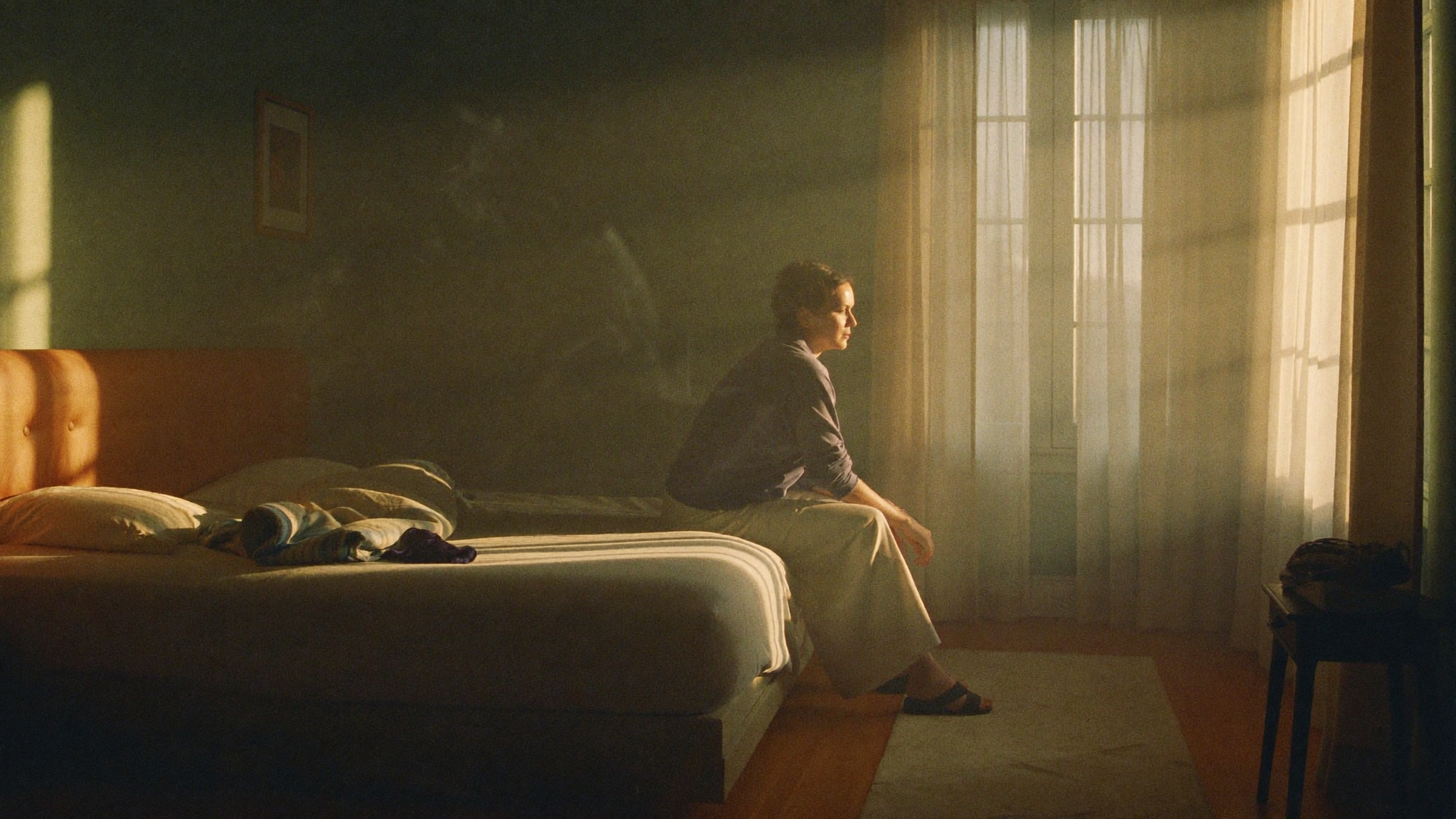
A woman at a bright window, considering the years ahead
09 — THE HEAD START

Small choices,
compounded over decades.

Health behaves like interest: the earlier you start, the more it compounds. Acting early lets you build reserve — a physical and mental buffer — long before you need it. You can’t change your genes, but you can change your trajectory, and the best time to change it is always sooner.

Reserve
Your buffer
Trajectory
Where habits lead
Compounding
Small choices, multiplied
START WHERE YOU STAND
Know your numbers,
change your trajectory.

Fifteen minutes. A structured, honest picture of where you are across the factors that matter — and where your biggest wins are hiding.

Start the free assessment →

This page is for education, not medical advice. It doesn’t diagnose, treat or replace your physician — always discuss health decisions, symptoms and screening with a qualified professional.

The Longevity Series
Home The Longevity Check Programs Books The Science Journal Reviews Pricing About Sign in Take the free check
DOMAIN {{ curDomain.num }} {{ curDomain.kicker }}

{{ curDomain.name }}

{{ curDomain.science }}

One of the twelve domains measured in your free Longevity Check. ← All twelve domains
WHY IT MATTERS

{{ curDomain.science }}

{{ curDomain.essay1 }}

{{ curDomain.essay2 }}

{{ s.n }}
{{ s.t }}
HOW IT CHANGES WITH AGE

The arc — and where you can bend it.

{{ a.k }}

{{ a.t }}

WHAT YOUR CHECK LOOKS AT

The signals behind this score.

LIFESTYLE ONLY · NEVER DIAGNOSTIC
{{ f.n }} {{ f.f }}
FIRST STEPS YOU CAN TAKE

Small, evidence-based moves that compound.

{{ r.n }}

{{ r.text }}

NOTHING AGES ALONE

Domains that move with this one.

{{ l.name }}

{{ l.why }}

{{ curDomain.progLabel }}
Where we go deeper on {{ curDomain.name }}
{{ curDomain.prog }}
{{ curDomain.progCta }}
EXPLORE THE OTHER DOMAINS
{{ c.name }}
← PREVIOUS
{{ domPrevName }}
NEXT →
{{ domNextName }}
See where {{ curDomain.name }} sits in your baseline.

The free check scores all twelve domains in about fifteen minutes — and shows you where your biggest wins are hiding.

Take the free check →
The Longevity Series
Home The Longevity Check Programs Books The Science Journal Reviews Pricing About Sign in Save & exit
BEFORE WE MEASURE

First, a little
about you.

Four short questions shape how we read your answers — the same habits mean different things at 28 and at 58.

WHAT’S AHEAD — TWELVE DOMAINS
{{ d.icon }}
{{ d.name }}
Private by design — your profile stays on your device. Encrypted in production, never sold.
01Your age
{{ o.label }}
02Biological sex— shapes bone, hormonal & body-composition guidance only
{{ o.label }}
03Your goals right now— choose all that apply
{{ o.label }}
04How active are you today?
{{ o.label }}
Continue to the assessment → {{ pHint }}
The Longevity Series
Home The Longevity Check Programs Books The Science Journal Reviews Pricing About Sign in Save & exit
Your progress{{ aPct }}
{{ r.icon }}
{{ r.name }}
{{ r.mark }}
Lifestyle factors only · educational, not diagnostic
{{ curWatermark }}
{{ ciGlyph }}
{{ ciChapter }}
{{ ciName }}
{{ ciScience }}
← Back Begin this chapter → {{ ciCount }} · ABOUT A MINUTE
{{ curGlyphBig }}
{{ curDomLabel }}
{{ curDomName }}
← Back
QUESTION {{ aQNum2 }} / {{ aQTot2 }}
{{ aQuestion }}
There are no wrong answers — answer for the last month.
{{ o.letter }} {{ o.label }}
← Back {{ aPct }} COMPLETE
Save & exit ×
THE LONGEVITY CHECK
Composing your
longevity baseline
{{ calcStage }}…
{{ calcCount }} / 12 domains
{{ t.icon }}
{{ t.name }}
{{ t.status }}
ANALYSIS COMPLETE
{{ calcScore }}
OF 100
Your baseline is ready.
{{ calcBandLabel }} baseline

{{ revealLine }}

What your full report reveals
{{ r.icon }}
{{ r.title }}
{{ r.desc }}
{{ r.lock }}In your full report
See my results →
Your 12 domain scores are free · the full report goes deeper
The Longevity Series
Home The Longevity Check Programs Books The Science Journal Reviews Pricing About Sign in Take the free check
{{ rOverall }}
OF 100
YOUR BASELINE — {{ today }}
Your longevity baseline: {{ rBand }}
{{ rProfileLine }}

{{ rSummary }}

Strongest — {{ rStrongName }} · {{ rStrongScore }}
Biggest opportunity — {{ rLowName }} · {{ rLowScore }}
WHAT’S WORKING
{{ w.name }}{{ w.score }}
{{ w.line }}
WHERE THE GAINS ARE
{{ g.name }}{{ g.score }}
{{ g.line }}
Your twelve domains
FREE BASELINE VIEW
{{ d.name }} {{ d.band }}{{ d.score }}
A first look at your lowest domains
Your full report analyses each domain in depth. Here’s where the free reading stops.
{{ t.name }} {{ t.score }}/100

{{ t.shown }} {{ t.d1 }}

{{ t.d2 }}

🔒 Continue reading in your full report →
UNLOCK YOUR FULL REPORT
Your baseline, turned into a plan.
{{ b }}
{{ reportPrice }}
ONE-TIME
Unlock my report →
One-time payment, no subscription, yours to keep.
{{ c.kicker }} 🔒
{{ c.title }}
{{ c.open }}
Your recommended path
RANKED FOR YOUR PROFILE & SCORES
{{ pathIntro }}
{{ p.rank }}
{{ p.name }} {{ p.tag }}
{{ p.reason }}
{{ p.cta }}
UNLOCK YOUR FULL REPORT
See everything the baseline is holding back.
{{ reportPrice }}
ONE-TIME
{{ b }}
Unlock my report →
One-time payment, no subscription, yours to keep.
START TODAY
{{ recTitle }}

{{ recBody }}

{{ recCta }}
7 modules · read, listen & watch
The Longevity Series
Home The Longevity Check Programs Books The Science Journal Reviews Pricing About Sign in Take the free check
The Longevity Series PERSONAL REPORT — {{ today }}
{{ rOverall }}
OF 100
THE LONGEVITY CHECK — YOUR BASELINE
Overall baseline: {{ rBand }}
{{ rProfileLine }}

{{ repIntro }}

Priority: {{ p.name }} · {{ p.score }}
More years — and more good years.
Twelve domains, one silhouette
THE FURTHER A POINT REACHES, THE DEEPER YOUR RESERVE
{{ repRadar }}
{{ d.roman }} {{ d.name }} {{ d.band }} {{ d.score }}
THE PATTERN IN YOUR RESULTS

One thread runs through your numbers: {{ repChainLow }}. Domains are coupled — the chain below tends to move together. Steady the first links, and the rest lift with them.

{{ c.name }}{{ c.score }}
The healthspan curve
THE GOAL Longevity isn't only a longer line — it's a flatter one. Keep function high through the decades, then compress the decline into as few years as possible. Every recommendation in this report serves that shape.
Your recommended path
RANKED FOR YOUR PROFILE & SCORES
{{ p.rank }}
{{ p.name }}
{{ p.reason }}
{{ p.cta }}
THE TWELVE DOMAINS — IN DEPTH

Where you stand, and what to do first

{{ d.roman }} {{ d.name }}
{{ d.band }} {{ d.score }}

{{ d.meaning }}

{{ d.mech }}

{{ d.science }}

WHAT’S WEIGHING ON THIS SCORE
{{ f.f }} — “{{ f.a }}”
EVIDENCE-BASED FIRST STEPS
{{ r.n }}{{ r.t }}
Go deeper: {{ d.prog }} covers this domain end-to-end. View program →
Go deeper: {{ d.prog }} — in production. {{ d.waitLabel }}
YOUR NEXT NINETY DAYS

A sequence, not a to-do list

Ordered by leverage for your scores: each phase builds on the one before it. Start with your lowest domain — the early moves there tend to lift the rest.

{{ ph.num }}
{{ ph.title }}
{{ ph.tag }}
{{ it.t }}
{{ it.tag }}
DAY 90
Retake the check on the same profile. The score is your feedback loop — expect the priority domains to move first, and treat anything that hasn’t moved as a signal to change the approach, not the goal.
This report is generated from your self-reported lifestyle answers and reflects associations described in peer-reviewed research. It is educational and informational only — it is not a medical assessment, diagnosis or treatment plan. Discuss health concerns with a physician.
The Longevity Series
Home The Longevity Check Programs Books The Science Journal Reviews Pricing About Sign in Take the free check
THE SERIES — A COMPLETE EDUCATION

One domain at a time,
studied properly.

Each program is a complete, standalone education — written, narrated and visualised. Study them in any order; every one stands on its own.

Explore the programs → Find your program — free check
Your path, from your check
View your scores →
{{ p.rank }}
{{ p.name }}
{{ p.reason }}
{{ p.cta }}
{{ cxCount }}
PROGRAMS
{{ cxLessonsTotal }}
LESSONS
12
DOMAINS COVERED
3
WAYS TO LEARN — READ · LISTEN · WATCH

{{ g.label }}

{{ g.tagline }}

{{ g.leadCard.no }}
{{ g.leadCard.kicker }}
{{ g.leadCard.name }}

{{ g.leadCard.dek }}

{{ g.leadCard.metaLine }} See curriculum →
{{ c.no }}
IN PRODUCTION
{{ c.kicker }}
{{ c.name }}

{{ c.dek }}

{{ c.metaLine }} See curriculum →
{{ progUpcoming.kicker }}

{{ progUpcoming.title }}

{{ progUpcoming.blurb }}

{{ u.name }}{{ u.eta }}
{{ u.dek }}
✓ On the list Join the waitlist
IN PRINT — 2027
The Library

Each program, distilled into a beautifully produced book. On Sleep arrives first — members get first access.

{{ owLibraryLabel }}
The Longevity Series
Home The Longevity Check Programs Books The Science Journal Reviews Pricing About Sign in Take the free check
← ALL PROGRAMS {{ curProg.statusText }}
{{ curProg.no }} — {{ curProg.flag }}

{{ curProg.name }}

{{ curProg.tagline }}

{{ curProg.intro }}

Enter the course → Preview Lesson 1 — free {{ curProg.priceLine }}
{{ curProg.waitLabel }} Members-first access · founding pricing
{{ curProg.meta }}
{{ curProg.trailerEl }}
{{ curProg.imgCap }}
WATCH THE TRAILER — 60s
THE PROMISE

{{ curProg.promise }}

WHO IT’S FOR
{{ w.t }}
Layered like every Series program: one path, two depths — follow the main line, or open the deep dives.
WHAT YOU’LL BE ABLE TO DO
{{ oc.n }}
{{ oc.t }}
{{ curProg.quoteInitial }}
★★★★★
“{{ curProg.quote }}”
{{ curProg.quoteWho }} · {{ curProg.quoteTag }}
WHY THIS WORKS
The evidence this program stands on
{{ p.n }}{{ p.h }}

{{ p.b }}

PARAPHRASED FROM THE PEER-REVIEWED LITERATURE · EVERY LESSON CITES ITS SOURCES
THE CURRICULUM

Seven chapters, from understanding
to a personal protocol.

Every lesson follows the house rhythm: the why (science), the how (protocol), then your step — one concrete action. 6–12 minutes, read or listened.
{{ m.rom }}
{{ m.t }}
CHAPTER {{ m.rom }} · {{ m.count }} LESSONS

{{ m.goal }}

{{ l.n }}
{{ l.t }}{{ l.tag }}
{{ l.gist }}
¶♬▷
THIS WEEK {{ m.act }}
THE PRACTICE — INCLUDED
Understanding is half the program. This is the other half.

{{ curProg.planBand }}

See the weekly template →
INCLUDED · WEARABLE RECOMMENDATIONS
Curated gear picks for this course — the exact models we’d buy, below.
INCLUDED · SUPPLEMENT RECOMMENDATIONS
A short, honest stack — what, why, dose and what to skip, below.
INCLUDED · INTERVENTION RECOMMENDATIONS
Levers beyond habits — heat, cold, light, breath and tests, ranked honestly.
HOW A LESSON WORKS
01The why. The science, in plain language — sourced, never hyped.
02The how. A concrete protocol, scaled to where you are.
03Your step. One action you take this week — nothing more.
READ OR LISTEN

Every lesson is written to be studied and narrated in studio quality — listen on a walk or read at your desk. Functional visuals carry the key concepts; your progress syncs across both.

LAYERED DEPTH

Follow the main line, or open the optional deep dives for the underlying science. Recovery tools — light, heat, cold, HRV — are framed honestly: what they do, for whom, and when they’re not worth it.

GEAR & WEARABLES · OPTIONAL
The physical layer — tools that make the practice easier to hold.
CURATION IN PROGRESS

Theory teaches and practice trains — a few well-chosen tools support both. For this course we curate what genuinely helps, when it’s worth the money, and the exact model we’d buy ourselves — available directly from the program.

PRODUCT IMAGE
{{ gi.cat }}{{ gi.n }}
{{ gi.name }}

{{ gi.why }}

[ OUR PICK — TO BE ANNOUNCED ]
Nothing here is required — every protocol works without equipment. We only list what we’d buy ourselves, and we say so when something isn’t worth it.
RECOMMENDED SUPPLEMENTS · OPTIONAL
A short, honest stack — nothing you don’t need.
BEING FINALISED

Supplements are the smallest lever in this course — behaviour always comes first. Alongside the lessons you’ll find a short, curated list for this program: what, why, dose, timing — and just as important, what to skip.

{{ sl.cat }}{{ sl.n }}
[ SUPPLEMENT — TO BE ANNOUNCED ]

{{ sl.note }}

Never required — food and behaviour first. Discuss anything you take with your own doctor or pharmacist, especially alongside medication.
RECOMMENDED INTERVENTIONS · OPTIONAL
Beyond daily habits — the bigger levers, honestly ranked.
BEING CURATED

Some levers sit outside the daily lessons — heat, cold, light, breathwork, tests and clinical conversations. For this course we rank which are worth your time, what the evidence actually supports, and what to leave alone.

{{ ivi.cat }}{{ ivi.n }}
[ INTERVENTION — TO BE ANNOUNCED ]

{{ ivi.note }}

Bigger levers deserve bigger honesty — each comes with dose, frequency and who it’s not for. Clinical steps always run through your own doctor.
A note on safety. {{ curProg.safety }}
{{ curProg.eta }}
Be first when it opens.

Waitlist members get first access and founding pricing — and Series members receive every program as it releases, at no extra cost.

{{ curProg.waitLabel }}
← {{ curProg.prevName }} {{ curProg.nextName }} →
{{ cl.chapter }}
← Curriculum

{{ cl.title }}

{{ cl.gist }}
{{ cl.videoLabel }}
{{ cl.progName }} · {{ cl.num }}
IN PRODUCTION The full script, narrated film and illustrations for this lesson are being produced in the Program Studio. The outline below is final — the finished lesson drops straight into this slot when it clears the quality gate.

{{ b.text }}

{{ b.text }}

{{ b.text }}
{{ r.label }}{{ r.text }}
{{ b.text }}
{{ r.q }}
{{ r.a }}
{{ b.kicker }}

{{ b.text }}

◆ DEEP DIVE{{ cl.deepTitle }}
{{ cl.deepSign }}

{{ cl.deepBody }}

◆ TOOL IN FOCUS{{ cl.toolTitle }}

{{ cl.toolBody }}

KEY TAKEAWAYS
{{ t.n }}{{ t.t }}
YOUR STEP — THIS WEEK

{{ cl.step }}

Every protocol in this course lands in one place — one repeatable week. The weekly template →
← {{ cl.prevTitle }} {{ cl.nextTitle }} →
The Longevity Series
← {{ plan.progName }} Enter the course →
THE PRACTICE · {{ plan.progName }}

Your weekly template.

{{ plan.heroSub }}

{{ c.t }}

{{ plan.heroNote }}

THE WEEK

One shape, on repeat.

{{ plan.weekNote }}
{{ w.d }}
{{ w.focus }}
{{ w.tag }}
{{ w.body }}
{{ w.mins }}
{{ plan.dailyLabel }}

{{ plan.daily }}

{{ plan.sessKicker }}

{{ plan.sessTitle }}

{{ plan.sessNote }}
{{ plan.sessWord }} {{ s.id }}
{{ s.t }}
{{ s.sub }}
{{ m.n }} {{ m.sets }}
{{ m.cue }}
THE EIGHT-WEEK CYCLE

Progress is programmed, not improvised.

{{ p.k }}
{{ p.t }}

{{ p.b }}

{{ plan.libKicker }}

{{ plan.libTitle }}

{{ plan.libNote }}
DEMO FILM · IN PRODUCTION
{{ x.pat }}
{{ x.n }}
{{ x.cues }}
EASIER{{ x.easier }}
HARDER{{ x.harder }}
IF YOU’RE STARTING FROM A HARD PLACE
{{ r.q }}
{{ r.a }}
A note on safety. {{ plan.safety }}
{{ plan.eta }}
The template comes alive inside the course.

{{ plan.ctaBody }}

{{ plan.waitLabel }} Preview lesson 1.1 — free
The Longevity Series
Home The Longevity Check Programs Books The Science Journal Reviews Pricing About Sign in Take the free check
A DEEP-DIVE PROGRAM — SLEEP & RECOVERY

Master the most powerful recovery process you have.

The Sleep Program is a complete education in sleep — the science, the levers, and a personal plan built on your own data. Layered to your level: whether you can't fall asleep, or want the last 10%.

Enrol now — {{ programPrice }} Preview lesson 1.1 — free
{{ baseAudioMark }} {{ baseAudioLabel }}
7 MODULES33 LESSONSREAD · LISTEN · WATCHCANCEL ANYTIME
CC
PROGRAM TRAILER — 60s
WHY — THE SCIENCE

Every lesson starts with the why: what the research actually shows, explained with nuance — never hype, never a lecture.

HOW — THE PROTOCOL

Then the how: concrete, realistic protocols — matched to your situation, whether you're troubleshooting or optimising.

YOUR STEP — THIS WEEK

Every lesson ends with one concrete action. Small steps, compounding weekly — that's how change sticks.

The curriculum

7 MODULES — 33 LESSONS — ±6 HRS AUDIO
{{ m.num }}
{{ m.title }}
{{ m.kern }}
{{ m.meta }}
{{ m.icon }}
{{ l.code }} {{ l.title }} {{ l.tag }}
{{ l.dur }}
THE PRACTICE — INCLUDED
Understanding is half the program. This is the other half.

One repeatable day, held for a week at a time — an anchored morning, a protected evening runway and a 3 a.m. protocol — with a habit library and an eight-week progression. Every protocol in the curriculum lands in it.

See the weekly template →
INCLUDED · WEARABLE RECOMMENDATIONS
Curated gear picks for this course — the exact models we’d buy, below.
INCLUDED · SUPPLEMENT RECOMMENDATIONS
A short, honest stack — what, why, dose and what to skip, below.
INCLUDED · INTERVENTION RECOMMENDATIONS
Levers beyond habits — heat, cold, light, breath and tests, ranked honestly.
GEAR & WEARABLES
The physical layer — useful, and smaller than the marketing suggests.

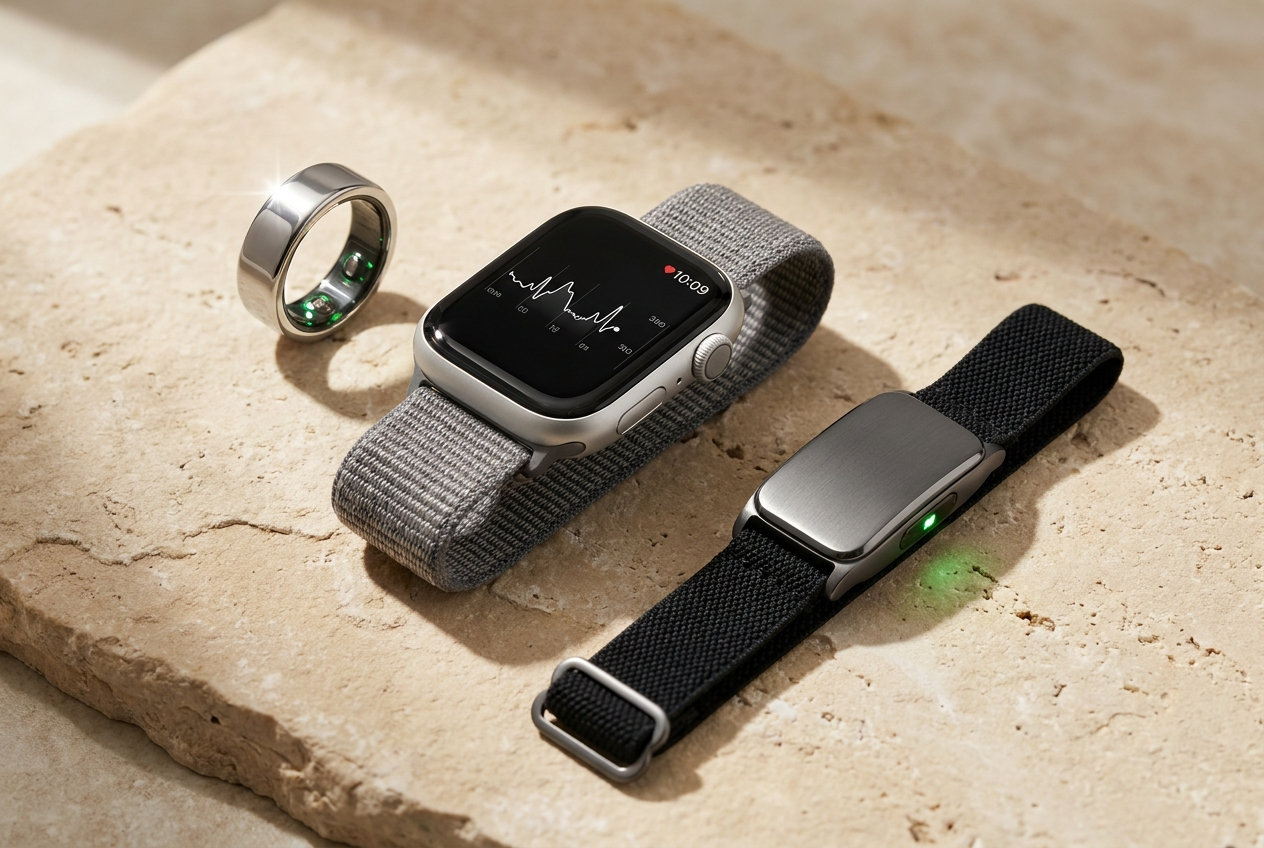
We don’t sell hardware, and we don’t earn a cent from anything below — which is exactly why we can be blunt about it. A few basics genuinely help. Most gadgets don’t. Here is what a tracker is honestly good for, and the two cheap things that beat all of it.

TRACKERS
Good for trends, poor at stages

A ring or band reads total sleep, timing and regularity well — and sleep stages badly. Read weekly trends, never nightly scores. Skip it entirely if you’re prone to sleep anxiety.

DARK & QUIET
The cheap things that work

Blackout curtains or a sleep mask, and earplugs or steady sound masking. Trivial cost, real effect — your brain wakes to changes in noise, not noise itself.

TEMPERATURE
Room and bedding first

Cooling toppers have a sound mechanism but barely-studied products. A cooler room and breathable bedding deliver most of the benefit for a fraction of the price.

SUPPLEMENTS · THE LAST 5%
A short, honest stack — and a longer list to skip.

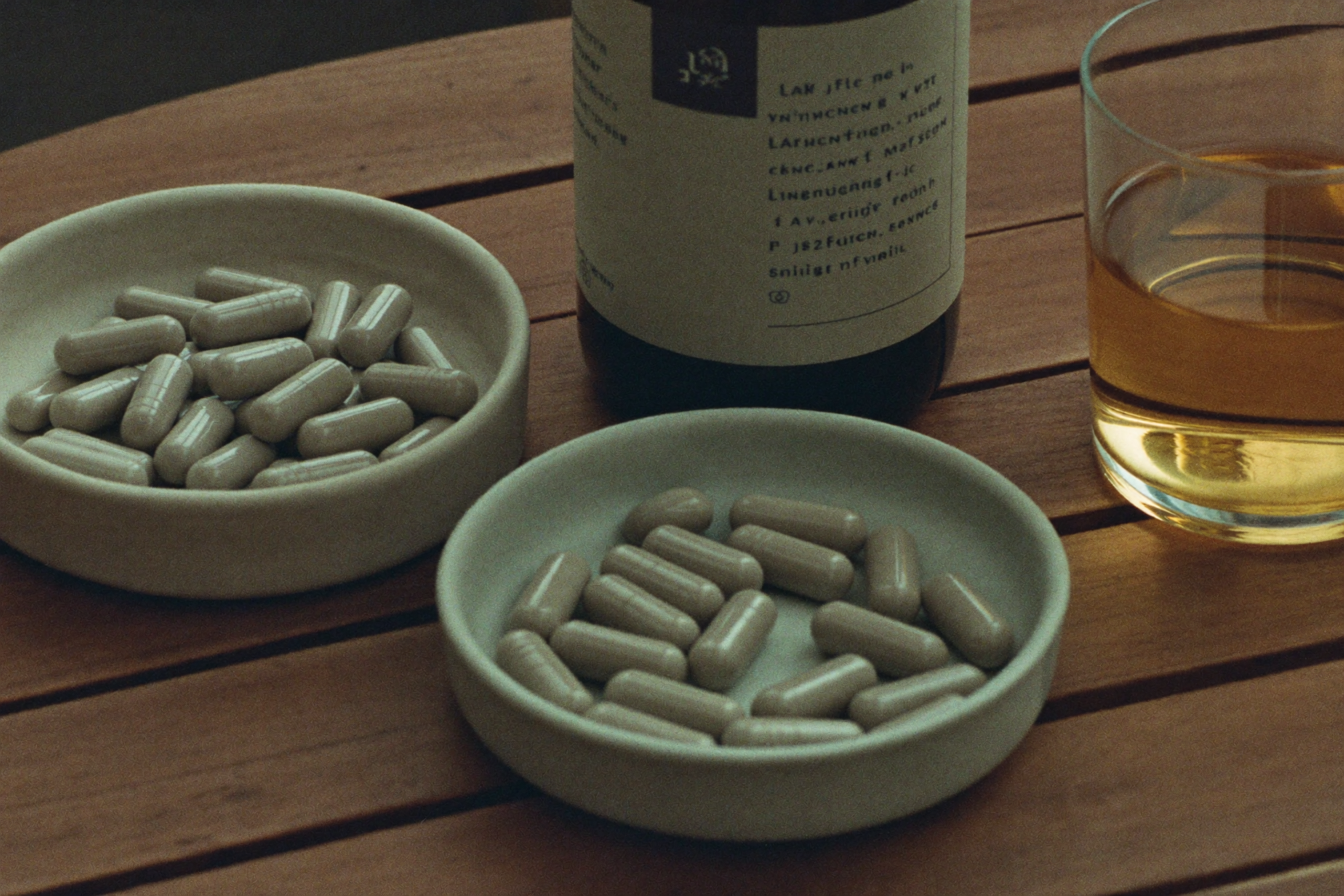
Supplements are the last five percent. Fix light, rhythm and your wind-down first — no capsule compensates for a chaotic clock. If the fundamentals are in place, a few things are reasonable to try. Most aren’t.

TIMING, NOT SEDATION
Melatonin

A timing signal, not a sleeping pill: 0.5–1 mg, hours before target bedtime, to shift a drifted clock or jetlag. Guidelines advise against it for ordinary insomnia. Buy pharmaceutical grade — one analysis found actual content from 83% below to nearly 500% above the label.

MILD & PLAUSIBLE
Magnesium, glycine, L-theanine

Magnesium glycinate (not oxide) is mild, plausible, modest. Glycine and L-theanine have small effects and are reasonable to try — supporting players, never the solution.

WE’D SKIP
Valerian, CBD, blends, antihistamines

Valerian, CBD for sleep and most “sleep formula” blends have weak or absent evidence. Over-the-counter antihistamines sedate but degrade sleep architecture and stop working within days.

Education, not medical advice. Melatonin is a hormone, not a herb — discuss anything you take regularly with your doctor or pharmacist, especially alongside medication or in pregnancy.
BEYOND DAILY HABITS
The expensive things work least.

The pattern is uncomfortable but consistent: the cheaper the intervention, the stronger the evidence. A 10,000-lux light box costs about €100 and has strong support. A red-light panel costs €2,000 and has almost none. We rank honestly — including the ones we would not buy.

WORTH ITSTRONG EVIDENCE
Light-therapy lamp · 10,000 lux

The strongest evidence in this entire list — and the cheapest. Anchors your clock through dark winter mornings.

Blackout curtains or a sleep mask

Trivial cost, real effect. Even light through closed eyelids reaches the clock.

Earplugs or steady sound masking

Your brain wakes to changes in noise, not noise itself. Steady masking smooths the peaks.

WORTH CONSIDERINGMODERATE / FOR SOME
Sleep tracker · ring or band

Good for total time, timing and regularity; poor at stages. Weekly trends, never nightly scores — and not for anyone prone to sleep anxiety.

Weighted blanket

Modest evidence, mostly in people with anxiety. Harmless, and it may help.

Cooling mattress topper

Sound mechanism, barely-studied products. Fix the room and the bedding first — far cheaper.

SAVE YOUR MONEYWEAK / NO EVIDENCE
Red / near-infrared light panels for sleep

The marketing runs far ahead of the science. We found no convincing controlled evidence for sleep.

CES & neurostimulation headsets

Weak evidence, high price.

Binaural beats & most “sleep sound” apps

Pleasant, but the sleep claims are not supported.

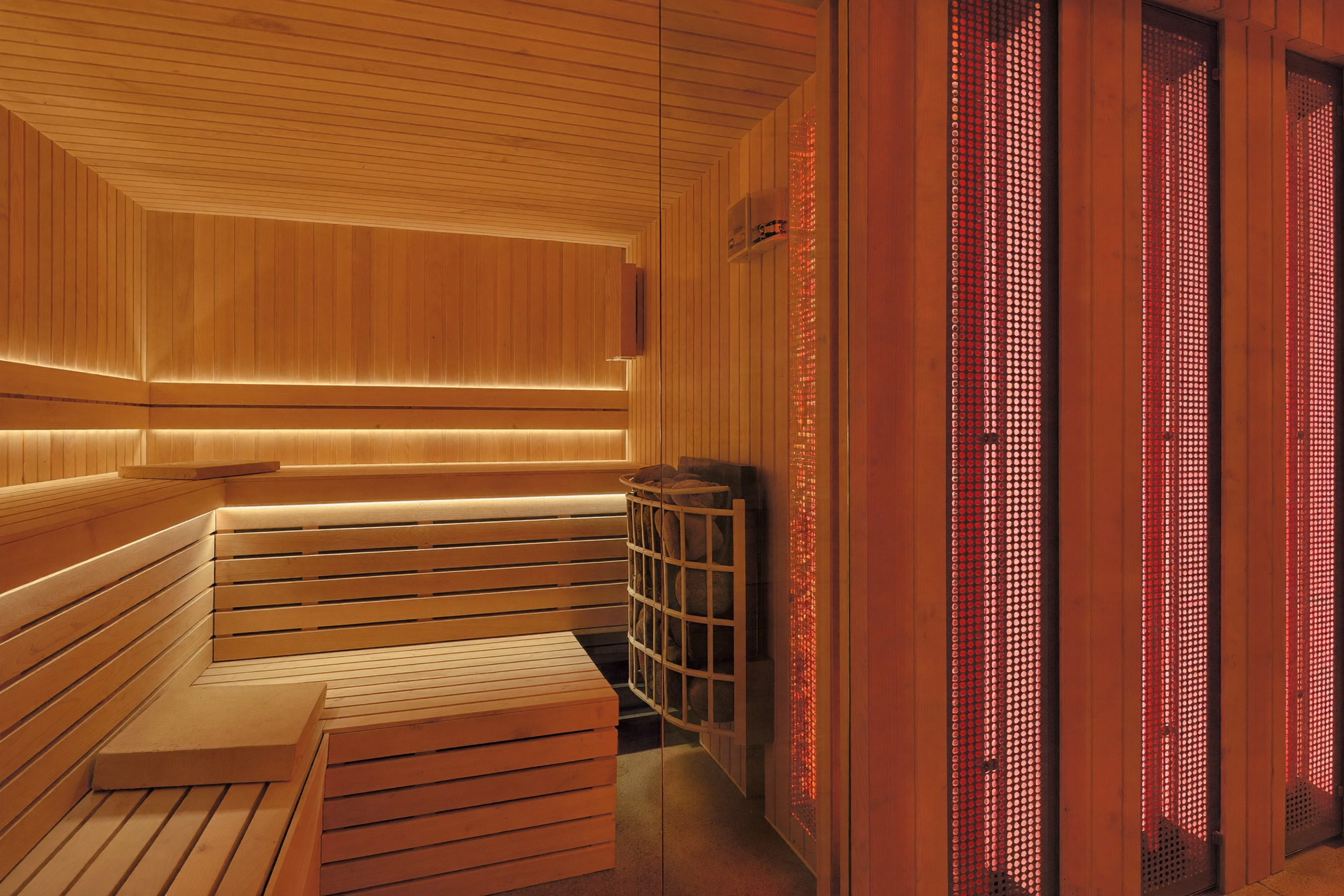
Infrared sauna specifically for sleep

Sauna heat may help via the warm-bath mechanism, but the infrared-specific sleep claims are unverified.

THE TWO THINGS THAT BEAT EVERYTHING ON THIS PAGE

Neither is sold in a wellness shop. The first is CBT-I — the only intervention with a lasting effect on chronic insomnia, and the treatment every major guideline recommends first (lesson 7.4). The second is getting sleep apnoea diagnosed: roughly 80 percent of cases go undetected, and no device on this page will compensate for it. Spending €3,000 on a smart mattress while an untreated airway wakes you fifty times a night is optimising the wrong variable by a factor of a thousand.

◆ DEEP DIVES
Optional depth, never homework

Expandable science sections under each lesson — the glymphatic system, cortisol rhythms, CBT-i principles — for those who want the full picture.

◆ TOOLS IN FOCUS
The recovery toolkit, honestly framed

Light therapy, sauna & cold, guided relaxation, HRV tracking — what each tool does, who it's for, and how to use it safely. No gadget worship.

THE LONGEVITY SERIES
The Sleep
Companion
PDF · FIELD GUIDE
INCLUDED WITH ENROLMENT — COMPANION GUIDE (PDF)
The Sleep Companion

Every protocol, checklist and worksheet from all seven modules, designed for print — the baseline log, the caffeine deadline card, the bedroom audit, and your one-page sleep plan. Made to live on a nightstand, not in a tab.

24 pages 7 protocol cards Baseline log One-page plan
[CONTENT: definitieve PDF ontwerpen — inhoudsopgave hierboven is leidend]
Preview the guide →
ENROLMENT
The Sleep Program
{{ programPrice }}
Yearly, or {{ programFrom }} monthly · cancel anytime · included in Series Membership
All 7 modules, 33 lessons — full access
Full audio narration of every lesson
Visual explainers, diagrams & protocols
Personal sleep plan builder (Module 7)
New lessons & updates while subscribed
Start the program — {{ programPrice }}
30-day money-back guarantee · instant access · educational content, not medical advice
The Longevity Series
The Sleep Program
{{ courseProgress }}
{{ m.num }} {{ m.title }} {{ m.icon }}
{{ s.code }} {{ s.title }} {{ s.right }}
THE PRACTICE
Your weekly template →
Unlock all 33 lessons
Full access · audio & visuals · cancel anytime
Enrol — {{ programPrice }}
{{ modOpenerMark }}
{{ modOpenerKicker }}
{{ modOpenerLabel }}
{{ modOpenerTag }}
{{ curKicker }} · {{ curTag }}

{{ curTitle }}

{{ curHook }}
Listen to this lesson {{ tLabel }} / {{ totalLabel }}
SPEED {{ speedLabel }} tap to change NARRATOR {{ v.name }} · {{ v.desc }}
Prefer to read? The full lesson is below.

Most of us treat sleep as the thing that happens when the day is over. The leftovers. The part of life we trade away first when work piles up, when the series gets good, when the alarm demands it. Underneath that habit sits a quiet assumption: that nothing much is happening in there anyway.

That assumption is wrong — and correcting it is the single most useful thing this course will do for you. Because once you understand what your body and brain actually do at night, protecting your sleep stops being discipline. It becomes obvious.

The busiest hours you'll never remember

Start with memory. As you sleep, the brain replays the day at high speed and moves what matters out of temporary storage in the hippocampus and into the cortex for long-term keeping. This is why a night of sleep after learning something beats another hour of cramming: in study after study, people who sleep on new material remember more of it the next day than those who stayed awake for the same stretch. The filing happens at night, not at the desk.

Then the physical repair. The single largest pulse of growth hormone in your entire twenty-four-hour cycle is released during the first block of deep sleep, in the earliest hours of the night — the body's nightly maintenance window for muscle, bone and tissue. Your immune system uses the same window to produce and calibrate its cells, which is part of why a run of short nights leaves you catching every cold going round.

And the emotional reset. During REM — the dreaming phase — the brain reprocesses the day's emotional experiences while its main stress chemical is turned almost all the way down. You keep the memory; you lose some of the sting. Miss that phase for a few nights and the effect is unmistakable: small setbacks start to feel like catastrophes, and you have less idea why.

None of this is passive. Sleep is not the absence of activity; it is a different kind of activity — one your waking brain cannot perform while it's busy being you. That's the reframe this course is built on: sleep is not the opposite of productivity. It is the production line.

CC
VISUAL — WHAT SLEEP DOES TO YOUR BRAIN · 40s
What sleep does to your brain — in 40 seconds. 3D EXPLAINER

The compounding cost of cutting it short

The effects arrive faster than most people realise. Push past roughly seventeen to nineteen hours awake and your reaction time and attention fall to a level researchers have compared with mild alcohol intoxication — no drink required, just a long enough day. A single short night measurably flattens mood and focus the next morning.

The slower story matters more. Even a few nights cut to four or five hours can meaningfully blunt how your body handles blood sugar the following day and tip your appetite hormones toward hunger. Stretched over years, chronically short sleep is consistently linked in large studies with weight gain, raised blood pressure, type-2 diabetes and a weaker immune system — a pattern that surfaces again and again across decades of research.

The point of knowing this is not fear. It's leverage. If poor sleep touches nearly every system, then improving sleep improves nearly every system — energy, appetite, mood, training, focus — simultaneously. There is no other lifestyle intervention with that breadth of return.

You are the operator

Here is the good news that carries the next seven modules: sleep responds to inputs, and the inputs are yours to control. Light, timing, temperature, food, your nervous system's gears — each is a lever, and each has a protocol. This course will teach you to measure where you stand, understand your own machinery, pull the right levers in the right order, and make the results last. Measure, understand, steer, sustain. That's the whole method.

THE METHOD · FOUR MOVES
MEASURESet an honest baseline before you change a thing — you can't steer what you haven't seen. That is this week's task.
UNDERSTANDLearn the handful of mechanisms that actually drive sleep — the clock, light, the nervous system — so every change you make has a reason behind it.
STEERPull the levers in the order that pays — rhythm and light first, fine-tuning later — one change at a time.
SUSTAINTurn what works into a routine that survives travel, deadlines and real life — so the gains hold.
◆ DEEP DIVEThe brain's night-time rinse cycle: the glymphatic system
{{ deepIcon }}

In 2013, researchers described a waste-clearance network in the brain — the glymphatic system — that becomes dramatically more active during deep sleep. Cerebrospinal fluid pulses through brain tissue, flushing out metabolic by-products that accumulate during waking hours, including proteins associated with neurodegenerative disease.

The mechanism is still being mapped, but the implication is hard to ignore: deep sleep appears to be when the brain takes out its trash. It's one of the strongest arguments for treating sleep quality — not just duration — as a first-class health priority. We'll return to how you can protect deep sleep specifically in Modules 3 and 6.

IF YOU'RE STARTING FROM A HARD PLACE
“I've slept badly for years.”
Then you're exactly who this course is built for — it rebuilds the foundations most quick fixes skip. Work through it in order; if real insomnia persists once the fundamentals are in place, Lesson 7.3 covers when to bring in a doctor.
“I work shifts or irregular hours.”
The principles still hold — you'll just apply them differently. Module 2 includes a dedicated protocol for shifting and disrupted rhythms.
“I wake at 3am nearly every night.”
Brief awakenings between cycles are normal; a nightly pattern that keeps you up is not. Note it in your baseline — Module 4 is devoted to exactly this.
YOUR STEP — THIS WEEK
Establish your baseline.

For the next seven days, note three things each morning: when you went to bed, when you woke up, and how rested you feel on a 1–10 scale. No apps required — a note on your phone is perfect. This baseline becomes the reference point you'll measure every improvement against in Module 7.

SELECTED REFERENCES
Xie et al. (2013), Sleep drives metabolite clearance from the adult brain, Science · Walker (2017), Why We Sleep, Scribner · Irwin (2015), Why sleep is important for health, Annu. Rev. Psychol.

Between your head touching the pillow and the alarm going off, your brain runs a program with remarkable structure. Not one kind of sleep, but several — arranged in cycles of roughly ninety minutes, each cycle a tour through distinct stages with distinct jobs.

The three states of the sleeping brain

Light sleep is the entryway, and about half of your night is spent here. Your heart rate and breathing slow, your body temperature drifts down, and the brain gradually loosens its grip on the outside world. It is easy to be woken from — which is why being roused in light sleep feels gentle and in deep sleep feels brutal — but it is not filler: this is where the brain fires off sleep spindles, quick electrical bursts that help lock in the day's learning and screen out noise that would otherwise wake you.

Deep sleep is the workshop, and it is loaded into the first third of the night. The brain's slowest waves sweep through in near-unison, it is the hardest stage to be woken from, and it is where physical restoration is concentrated — the growth-hormone pulse for muscle and tissue, immune housekeeping, and the overnight clearance you met in the last lesson. When someone says they slept a full night and still woke unrefreshed, this is usually the stage they were short of.

REM sleep — the dreaming state — clusters in the second half of the night and grows with every cycle toward morning. The brain is almost as active as when you are awake, while the body is briefly held still so you don't act your dreams out. This is the editor: it knits new memories together, rehearses skills, and drains the emotional charge from the day. Cut your morning short and REM is the first thing you lose.

This architecture explains something most people learn the hard way: the night is not symmetrical. Go to bed very late and you compress deep sleep; cut the morning short and you amputate REM. Six hours taken from the wrong end of the night costs more than the clock suggests.

What a healthy night looks like

Four to six full cycles, each running roughly ninety minutes — though that is only an average, with real cycles landing anywhere from about seventy to a hundred and twenty. The shape matters more than the count: deep sleep front-loaded into the early cycles, REM stretching out across the later ones, and — this surprises people — brief awakenings between cycles that are completely normal and forgotten by morning. A "perfect unbroken night" is a myth; a well-structured one is the real target. Later in this program, when you learn to read your own sleep data, this is the shape you will be looking for.

VISUAL — THE HYPNOGRAM · 30s
One night of sleep — four to five cycles, every stage with its own job. 23:00 – 07:00
WHAT QUIETLY WRECKS EACH STAGE
DEEP SLEEPA warm bedroom, a late or heavy meal and evening alcohol all shrink it. It wants a cool, dark room and a settled body — the work of Modules 5 and 6.
REMAlcohol suppresses it, and every hour clipped off the morning removes REM-rich sleep you can't recover. A protected wake time is its best defence.
THE NIGHTIrregular timing fragments the whole architecture. A steady wake time is the single most protective habit — and Module 2's entire subject.
◆ DEEP DIVEREM: the overnight therapist
{{ deepIcon }}

During REM, the brain replays emotionally charged experiences while one key stress chemical — noradrenaline — is switched almost completely off. Researchers describe this as reprocessing memory without the emotional charge: you keep the lesson, you lose some of the sting. It's a compelling explanation for why a run of poor nights makes everything feel more threatening, and why protecting the last hours of your night — where REM lives — matters for emotional resilience, not just memory.

IF YOUR NIGHT ISN'T ADDING UP
“I sleep a full night and still wake exhausted.”
The problem is usually fragmentation or missing deep sleep, not duration — alcohol, a warm room and late meals are the classic causes. Loud snoring paired with daytime exhaustion is a different flag; Lesson 7.3 covers when to have it looked at.
“I wake around 5am and can't drop off again.”
The last cycles are light and REM-rich, so early waking is easy. Keep the room dark, resist checking the clock, and let Module 4's tools settle a mind that starts turning.
YOUR STEP — THIS WEEK
Protect a full final cycle.

Pick your wake time, count back seven and a half hours, and treat that as your lights-out. You're not chasing perfection — you're giving the night enough room for its full architecture, including the REM-rich final act.

SELECTED REFERENCES
Carskadon & Dement (2011), Normal Human Sleep: An Overview, Principles and Practice of Sleep Medicine · Walker (2017), Why We Sleep, Scribner

Why do you fall asleep at 11pm and not at 3pm? Two forces, working together, decide — and nearly every sleep problem you'll ever have is one of these two forces out of position.

Force one: sleep pressure

From the moment you wake, a molecule called adenosine begins to accumulate in your brain — a by-product of simply being awake and burning energy. The longer you are up, the higher it climbs, and the heavier the drowsiness it produces. This is sleep pressure: an hourglass that fills across roughly sixteen waking hours and empties again while you sleep. By late evening the sand is high and sleep comes easily; drain it at the wrong moment and the whole night suffers.

Caffeine works on exactly this system, and it is worth understanding now because it explains so much. It does not remove the sand — it slips into the receptors adenosine would dock onto and blocks your ability to feel the pressure. The tiredness is still there, waiting behind the curtain. And because caffeine has a half-life of around five to six hours, an afternoon coffee still has a meaningful dose circulating at bedtime, quietly thinning your deep sleep even when you fall asleep on time. We return to the timing of it in Module 5.

Force two: the clock

The second force is your circadian rhythm — an internal twenty-four-hour timer that schedules alertness and sleepiness at particular hours, regardless of how long you have been awake. All day it runs a rising alertness signal that deliberately pushes back against the mounting sleep pressure, keeping you upright and functional even as the hourglass fills. It explains the mid-afternoon dip, the "second wind" at 10pm, and why an all-nighter feels strangely easier at 6am than at 4am.

In the last hour or two before your natural bedtime the clock finally eases off that alertness signal and releases melatonin — the hormone that doesn't knock you out but announces to the body that night has arrived. That hand-off — alertness stepping back so sleep pressure can take over — is the open gate you want to walk through. Miss it, pressing on with bright light and work, and the clock can hand you a fresh burst of alertness: the maddening "I was tired an hour ago and now I'm wide awake."

Great sleep happens when the two forces align: high pressure meeting the clock's open gate for sleep. Most sleep problems are misalignment — pressure drained by a late nap, or a clock shifted by weekend lie-ins and late light. The next module is devoted entirely to the clock, because it's the force you can steer most powerfully.

BUILD THE PRESSURE, RESPECT THE GATE
BUILDStay up the full day; no long or late naps, so the hourglass is genuinely full by night.
ANCHORSame wake time every day, plus morning light — this is what keeps the gate opening at a predictable hour.
CAPDraw a caffeine line eight to ten hours before bed, so it isn't blocking pressure or thinning deep sleep.
GATEWhen evening sleepiness arrives, dim the lights and go. Don't trade the open gate for one more episode.
◆ DEEP DIVEThe nap, used correctly
{{ deepIcon }}

A nap is a withdrawal from your sleep-pressure account. Taken early (before ~2pm) and kept short (15–25 minutes), it refreshes without denting the night. Taken late or long, it drains exactly the pressure you need at 11pm — which is why the person who "can never fall asleep" and the person who "needs a nap every evening" are often the same person in a loop. If you struggle at night, the nap is the first suspect.

WHEN THE TWO FORCES FIGHT
“I'm exhausted all day but wide awake at night.”
That is a clock problem, not a pressure one — usually too little morning light, too much evening light, and an irregular wake time. Module 3 is built to fix exactly this.
“I crash hard around 3pm.”
That is the normal afternoon dip in the alertness signal. Ride it with light and a short walk rather than a long nap that steals tonight's pressure.
YOUR STEP — THIS WEEK
Guard the hourglass.

This week, no naps after 2pm and none longer than 25 minutes. Notice what happens to how fast you fall asleep at night — you're watching sleep pressure do its work.

SELECTED REFERENCES
Borbély (1982), A two process model of sleep regulation, Human Neurobiology · Clark & Landolt (2017), Coffee, caffeine, and sleep, Sleep Medicine Reviews

"Everyone needs eight hours" is the nutrition-label version of a much more interesting truth. The research consistently points to a range — for most adults, somewhere between seven and nine hours — with real individual variation inside it, part of it written in your genes.

Quality is half the story

Two people can both log eight hours and wake in different universes: one with consolidated, well-structured sleep, the other with a night quietly shredded by alcohol, a late meal or a too-warm room. Duration is what the clock measures; quality is what your body actually experiences. Eight fragmented hours can leave you worse off than seven solid ones, because it is the completed cycles — not the minutes in bed — that do the restoring.

This is why the course spends far more time on quality than on hitting a magic number — that is where the leverage lives. It is also why chasing a sleep score in an app can backfire: fixating on the figure creates a low-grade anxiety that is itself one of the most reliable ways to sleep worse. Researchers even have a name for it — orthosomnia — and we come back to it in Module 7.

Finding your number

The most honest test needs no technology. Across a relaxed week — a holiday is ideal — keep a consistent bedtime, leave the alarm off, and watch when you wake on your own. After the first night or two repay some backlog, the time your body settles into is close to your real need, and how you feel by mid-morning without caffeine heroics is the confirmation. For most adults it lands between seven and nine hours; a small number genuinely need a little less or more, and that is normal — not a target to force yourself toward.

◆ DEEP DIVEThe short-sleeper myth
{{ deepIcon }}

Nearly every office has someone who swears they thrive on five hours. Almost always, they are simply used to running below their best. Genuine short sleepers — people who feel and function fully on six hours or less — do exist, but they carry rare genetic variants (in genes such as DEC2 and ADRB1) and make up well under one percent of the population. In sleep-restriction studies, everyone else keeps degrading night after night while their own ratings of sleepiness level off — they stop noticing the deficit long before it stops accumulating. The uncomfortable takeaway: feeling fine on too little sleep is usually a failure of self-assessment, not proof you're the exception.

SIGNS YOU'RE GENUINELY UNDER-SLEPT
·You can't wake without an alarm, and the snooze button is a daily ritual.
·You crave caffeine before mid-morning just to feel normal.
·You fall asleep within seconds, or nod off in dull moments during the day.
·You sleep an hour or more longer at weekends to catch up.
·Mood, patience and focus visibly lift on the rare mornings you wake naturally.
YOUR STEP — THIS WEEK
Compare feeling to number.

In your baseline log from Lesson 1.1, circle your two best-feeling mornings. Look at how long — and how regularly — you slept before each. That pattern is worth more than any universal rule, and Module 2 will show you how to make it repeatable.

SELECTED REFERENCES
Hirshkowitz et al. (2015), National Sleep Foundation's sleep time duration recommendations, Sleep Health · Van Dongen et al. (2003), The cumulative cost of additional wakefulness, Sleep

You have never once looked at a clock to know it was time to feel sleepy — and yet, most nights, it comes. Somewhere inside you is a timekeeper that runs whether you consult it or not, setting the rhythm of nearly everything your body does across twenty-four hours. Learn to work with it, and sleep stops being a nightly negotiation. Fight it, and no amount of effort in bed will save you.

The conductor and the orchestra

Deep in the brain, in a cluster of about twenty thousand nerve cells sitting just above where your optic nerves cross, is the suprachiasmatic nucleus — your master clock. It keeps time to a rhythm close to, but not exactly, twenty-four hours — nearer twenty-four hours and twelve minutes on average — and every morning it resets itself against the outside world. Think of it as the conductor of an orchestra: it doesn't play an instrument, but it sets the tempo for every section.

Because nearly every organ you have — liver, gut, muscle, pancreas — runs its own local clock, and all of them take their cue from that central beat. Your body temperature, your hormones, your alertness, your digestion, even your blood pressure rise and fall on a schedule set from above. This is why a rhythm that's stable feels effortless, and why one that's scattered leaves the whole body slightly out of tune.

Why a steady beat calms everything

When your daily signals — light, meals, movement, sleep — arrive at consistent times, the conductor keeps the whole orchestra together, and sleepiness reliably shows up when you want it to. When those signals scatter across the week, the sections drift out of phase with one another. The feeling has a name people know well without the biology: everything feels a little off. The rest of this module is about giving your conductor a clear, steady beat to follow.

◆ DEEP DIVEWhy your clock runs slow — and why that helps
{{ deepIcon }}

Left with no cues at all — no daylight, no clocks, no schedule — the human clock doesn't hold at twenty-four hours. In classic isolation experiments, people's rhythms drifted a little later each day, because the internal period averages closer to twenty-four hours and twelve minutes. That small surplus is exactly why your clock needs resetting every single morning: a burst of daylight nudges it back the few minutes it ran long overnight. Miss the morning signal and the drift quietly accumulates — the biological reason a run of dark mornings and late nights walks your bedtime later and later.

GIVE YOUR CONDUCTOR A STEADY BEAT
WAKEOne wake time, seven days a week — the master reset the whole rhythm hangs on.
LIGHTDaylight in your eyes within an hour of waking; dim light in the evening.
MEALSEat at roughly consistent times — your gut keeps a clock too.
SETTLEBegin winding down at a similar hour each night, so the beat is unmistakable.
YOUR STEP — THIS WEEK
Notice your evening dip.

This week, note the time you first feel genuinely sleepy in the evening — that's your clock talking. Don't override it with bright light and screens; treat it as the opening of your sleep window and start moving toward bed.

SELECTED REFERENCES
Czeisler et al. (1999), Stability, precision, and near-24-hour period of the human circadian pacemaker, Science · Roenneberg & Merrow (2016), The Circadian Clock and Human Health, Current Biology

Some people wake at six full of energy and fade by nine at night. Others don't feel truly themselves until noon and hit their stride when the larks are asleep. Neither is lazy, and neither is virtuous — they're running different factory settings. That setting is your chronotype, and knowing yours turns a lot of self-blame into simple scheduling.

Lark, owl, or somewhere between

Chronotype is the natural timing of your clock — where your body wants to place sleep on the 24-hour dial. Most people sit somewhere in the broad middle; a minority are strong morning types, a minority strong evening types. It's substantially genetic, which is why "just go to bed earlier" is useless advice for a true owl: their biology is holding the door shut until later.

It also shifts across a lifetime. Teenagers drift genuinely later — their biology delays sleep by an hour or two, which is why early school starts fight a losing war with adolescent brains. In later decades the clock tends to move earlier again. So the "right" schedule isn't fixed for life; it moves, and it's worth re-checking every few years.

Working with your type, not against it

You can nudge your chronotype a little with light and timing — the next module is entirely about that — but you can't rewrite it. The aim is alignment: match your most demanding work to your natural peak where you can, and stop measuring yourself against someone else's clock. An owl forced onto a lark's schedule pays a real, measurable tax; the first step to lowering it is simply knowing which bird you are.

◆ DEEP DIVESocial jetlag: the commute you take every Monday
{{ deepIcon }}

The gap between your biological rhythm and your social schedule — work, school, family — acts on the body like a weekly flight across time zones. Sleep late and long at the weekend, snap back to a 6:30 alarm on Monday, and you've effectively flown west on Saturday and east on Monday. Researchers call it social jetlag, and larger amounts of it are associated with worse mood, less favourable metabolic markers and poorer sleep quality. The fix is rarely a new job; it's narrowing the gap from both sides — slightly earlier weekend nights, slightly gentler Monday mornings.

WORK WITH YOUR TYPE, NOT AGAINST IT
KNOW ITNote when you'd sleep and wake with no obligations at all — that is your true type.
ALIGNPut your hardest thinking in your natural peak wherever you have the choice.
OWLSProtect a later wake time where you can; grab bright light the moment you rise to pull earlier.
LARKSGuard your early-evening energy; avoid heavy bright light late that drags you later.
COMMON CHRONOTYPE TRAPS
“I'm a night owl stuck on an early job.”
You can advance your clock somewhat — aggressive morning light, dim evenings, a fixed early wake — but you can't erase your type. Aim to shrink the gap, not win the war.
“My partner and I are on opposite clocks.”
Normal, and mostly workable. Protect each person's sleep window — an eye mask, separate light habits — rather than forcing a shared bedtime that suits neither of you.
YOUR STEP — THIS WEEK
Measure your social jetlag.

Compare your natural weekend wake time with your weekday alarm. More than ninety minutes apart? That gap is your target — and the regularity protocol in the next lesson is your priority.

SELECTED REFERENCES
Roenneberg et al. (2012), Social jetlag and obesity, Current Biology · Wittmann et al. (2006), Social jetlag: misalignment of biological and social time, Chronobiology International

If this course could give you only one instruction, it would be this one — and it's almost boring in its simplicity: get up at the same time every day. Not go to bed at the same time. Get up. It's the least glamorous intervention in all of sleep science, and reliably one of the most powerful.

Why the wake time is the anchor

Your bedtime is only partly under your control — you can't force sleepiness. But your wake time is a decision, and it's the moment your clock resets each day. Hold it steady and everything downstream stabilises: your evening sleepiness starts arriving at a predictable hour, your sleep pressure builds on schedule, and falling asleep gets easier without any effort aimed at falling asleep. Fix the morning, and the night tends to fix itself.

The weekend problem

Here's the trap almost everyone falls into: five days of discipline, then a weekend of sleeping in to "catch up". Two late mornings are enough to drift your clock later, so by Sunday night you're wide awake at bedtime and Monday feels like a wall. The catch-up sleep is real, but the rhythm cost is often bigger. A more stable approach: keep weekend wake times within about an hour of weekdays, and repay a genuine sleep debt with a short early-afternoon nap rather than a long lie-in.

A realistic protocol

Perfection isn't the goal; consistency is. Pick a wake time you can hold on most days, including a version that survives a late night — if you're up until 2am, still get up within an hour of your normal time and let that evening's sleep pressure do the rest. One steady anchor, held loosely but honestly, outperforms a rigid schedule you abandon by Thursday.

THE REGULARITY RULES
ANCHORSame wake time daily, weekends included, within about an hour.
RECOVERAfter a bad night, still rise near your normal time and let that night's pressure rebuild.
CATCH UPRepay real debt with a short early-afternoon nap, not a long weekend lie-in.
HOLDConsistency you actually keep beats a perfect schedule you abandon by Thursday.
IF A FIXED WAKE TIME FEELS IMPOSSIBLE
“The weekend lie-in is the only sleep I get.”
A single extra hour is fine — it's the two- and three-hour lie-ins that reset your clock and wreck Sunday night. Cap the drift and nap instead.
“My schedule genuinely changes week to week.”
Anchor whatever you can — even just the wake time or breakfast — and accept the rest will flex. One fixed time-giver holds a surprising amount together.
YOUR STEP — THIS WEEK
One wake time, seven days.

Choose a single wake time — weekends included — and hold it for seven days, even after a poor night. Watch what happens to how quickly you fall asleep by the end of the week. For many people this one change does more than everything else in the course combined.

SELECTED REFERENCES
Phillips et al. (2017), Irregular sleep/wake patterns are associated with poorer academic performance, Scientific Reports · Chaput et al. (2020), Sleep timing, duration, and consistency, Applied Physiology, Nutrition, and Metabolism

Sometimes life scatters the clock for you: a run of night shifts, a flight across continents, a newborn, a season of chaos. The rhythm you built comes undone, and it feels like starting over. It isn't — a disrupted clock can be walked back deliberately, and this lesson is the map for doing it.

Shifting a rhythm, step by step

Clocks move gradually, not in a single leap — most people can shift reliably by up to an hour a day, no more. The tools are the same ones you'll meet in the next module, applied with intent: bright light at the right end of the day to pull your rhythm, darkness at the other to protect it, and consistent meal and movement times to reinforce the target. Push in one direction with light in the morning; in the other with light in the evening. Trying to jump the whole gap at once simply doesn't take.

Jet lag: two different problems

Flying east and flying west are not the same task. Heading east, you must advance your clock — go to bed earlier than it wants — which is the harder direction, helped by morning light at your destination. Heading west, you delay your clock — stay up later — which most people find easier, helped by evening light. A useful rule of thumb: begin nudging your schedule a day or two before you fly, and on arrival, chase or avoid daylight according to the direction you travelled.

When perfection isn't available

Rotating shift work is the hardest case, and honesty matters more than idealism here: for many shift patterns you can't fully align your clock, so the goal shifts to damage control — anchoring what you can, protecting sleep opportunity fiercely, and using light and dark strategically around your shifts. If your work permanently fights your biology, the realistic aim is to soften the cost, not to pretend it away.

◆ DEEP DIVEMeal timing and movement as time-givers
{{ deepIcon }}

Light is the master signal, but food and exercise are legitimate zeitgebers — "time-givers" — too. A consistent breakfast and a morning walk both tell your peripheral clocks, in the gut and muscle, that it's daytime. When you need to shift a rhythm fast, aligning meals and movement with your target schedule rather than your current one measurably speeds the adjustment. It's why eating on the plane at your destination's mealtimes, not your departure's, is one of the most practical jet-lag tactics there is.

JET LAG · WHICH WAY ARE YOU FLYING?
EASTHarder. Advance your clock: start going to bed earlier a day or two ahead, then chase morning light on arrival.
WESTEasier. Delay your clock: stay up later, seek evening light, and sleep in a touch.
PACEShift by up to an hour a day — don't try to jump the whole gap at once.
PLANEEat and sleep on your destination's clock as soon as you board.
THE HARD CASES
“I work rotating shifts.”
Full alignment often isn't possible; aim for damage control — protect your sleep opportunity fiercely, use light and blackout strategically around shifts, and keep one anchor where you can.
“Jet lag floors me for a week.”
Start shifting before you fly, and be ruthless about light on arrival — chasing or avoiding it by direction. Most people halve the recovery time.
YOUR STEP — THIS WEEK
Hold one anchor.

If your schedule shifts this week — travel, a late event, an odd shift — pick a single anchor and keep it fixed: your wake time, your breakfast, or a morning walk. One steady time-giver holds the whole rhythm together while the rest flexes.

SELECTED REFERENCES
Eastman & Burgess (2009), How to travel the world without jet lag, Sleep Medicine Clinics · Wehrens et al. (2017), Meal timing regulates the human circadian system, Current Biology

If the last module gave you a clock, this one gives you the dial that sets it. Of all the levers you can pull on your sleep, one towers over the rest — not a supplement, not a gadget, not a technique. It's light. Master the light in your day and you master the timing of your night; ignore it, and every other tactic is fighting uphill.

The eye's other job

Your eyes do two jobs. The famous one is vision. The quieter one is timekeeping: a set of light sensors reports the brightness of the world directly to your master clock, and that signal is what keeps your internal day locked to the actual day. This is why light is the strongest possible input — it speaks to the clock in its native language, more loudly than food, exercise or willpower ever could.

The catch is that this system evolved outdoors, under a sky, and we now live in caves lit by candles — bright screens in the evening, dim rooms by day. Our clocks are reading light signals that no longer match the sun, and a great deal of modern sleep trouble traces straight back to that mismatch.

Daylight is a different order of magnitude

Here's the fact that reframes everything: a bright indoor room might measure a few hundred lux, while an overcast morning outdoors is ten thousand, and full sun far more. To your eyes a well-lit office and the outdoors feel similar; to your clock they are worlds apart. The master pattern for the rest of this module follows from that single gap — bright days, dim evenings — and it's the shape your whole day should take.

◆ DEEP DIVEThe cells in your eye that don't see
{{ deepIcon }}

Around the turn of the millennium, researchers identified a class of retinal cells containing a pigment called melanopsin. These cells contribute almost nothing to the images you see — their entire job is reporting light levels to the circadian clock. They respond most strongly to bright, blue-rich light, exactly the signature of daytime sky. It's why people who are visually blind can often still keep a normal rhythm, and why your clock isn't fooled by a dim room even when your conscious mind reads it as "light enough": the eye is measuring brightness even when you're not looking at anything in particular.

IF DAYLIGHT IS HARD TO GET
“I'm indoors all day — isn't a big window enough?”
Rarely. A bright office is a few hundred lux; your clock wants thousands. Step actually outside, even briefly — or use a daylight lamp, which the next lesson covers.
“I work nights and sleep by day.”
The same rules run in reverse: bright light through your working night, and true darkness for your daytime sleep. Module 2's reset tools are built for exactly this.
YOUR STEP — THIS WEEK
See the gap for yourself.

Open any free lux-meter app and take two readings: one by a window indoors, one just outside the door. The gap — often a hundredfold — is the entire argument of this module, measured in ten seconds.

SELECTED REFERENCES
Berson et al. (2002), Phototransduction by retinal ganglion cells that set the circadian clock, Science · Blume et al. (2019), Effects of light on human circadian rhythms, sleep and mood, Somnologie

Of everything in this course, this is the habit with the best ratio of effort to reward: light in your eyes, early in the day. It costs nothing, takes minutes, and it's the single most reliable way to anchor your rhythm and set up an easy night — hours later, without you thinking about it.

How the morning sets the night

Morning light does two things at once. It sends a firm "the day has started" signal that locks your clock in place, sharpening your daytime alertness. And it starts a countdown: roughly fourteen to sixteen hours later, your body releases melatonin and sleepiness arrives on schedule. Get light early and you're effectively setting a timer for tonight's sleep. Miss it, and the timer drifts later — which is why so many "I can't fall asleep" problems are really "I never saw the morning" problems.

The protocol

Aim for ten to twenty minutes of outdoor light within an hour of waking — longer on grey days, since cloud cuts the intensity. It doesn't need to be direct sun, and you should never stare at it; simply being outside with your eyes open is enough. No sunglasses for this window, since they blunt the very signal you're after. A walk, a coffee on the step, the commute on foot — any of them counts, and consistency matters more than duration.

◆ TOOL IN FOCUSLight therapy & daylight lamps

For dark winters, early starts, or lives lived mostly indoors, a 10,000-lux daylight lamp used for twenty to thirty minutes with breakfast can stand in for the morning sky. What matters is intensity at the eye, timing within an hour of waking, and consistency. It's among the best-evidenced tools in all of sleep and mood science — and one of the cheapest. If low winter mood is part of your picture, this tool earns its place twice over.

WHEN THE MORNING WON'T COOPERATE
“It's pitch dark when I wake in winter.”
Use a 10,000-lux lamp with breakfast, then get outside the moment there's real daylight. A dawn-simulator alarm helps you wake, but it's too dim to set the clock on its own.
“I genuinely can't get out in the morning.”
Sit right by the brightest window with the curtains wide, or use a daylight lamp. Something bright beats nothing — and doing it daily beats doing it perfectly.
YOUR STEP — THIS WEEK
Ten minutes, first thing.

Every morning this week: get at least ten minutes of outdoor light within an hour of waking, no sunglasses. Rain counts. Cloud counts. Consistency counts most — pair it with something you already do, like your first coffee, so it sticks.

SELECTED REFERENCES
Wright et al. (2013), Entrainment of the human circadian clock to the natural light-dark cycle, Current Biology · Golden et al. (2005), The efficacy of light therapy in the treatment of mood disorders, American Journal of Psychiatry

"Blue light is ruining your sleep" is one of those claims that's half true and half marketing. It's worth getting right, because the popular version sends people chasing the wrong fix — buying tinted glasses while leaving the actual problem, a brightly lit house at night, switched firmly on.

What evening light actually does

The same light sensors that anchor your clock in the morning work against you at night. Bright light in the evening tells your clock the day isn't over, suppresses melatonin, and pushes your sleep later. That part is real and well established: the brighter and later the light, the bigger the delay.

The nuance the headlines miss

Colour matters, but intensity and timing matter more. A dim phone held at arm's length is a far smaller circadian insult than a blazing kitchen at eleven at night — yet people fret about the phone and stand under the ceiling lights. The practical hierarchy is simple: dim the whole room first, warm the colour second, and worry about individual screens a distant third. Get the room right and the screen mostly takes care of itself.

◆ DEEP DIVEIntensity and timing beat colour
{{ deepIcon }}

Blue wavelengths do have the strongest effect per unit on the melatonin system, which is where the blue-light story comes from. But research increasingly shows that total light intensity and the timing of exposure carry more practical weight than colour alone. Blue-blocking glasses worn in a bright room are treating the symptom while ignoring the disease. The bigger, cheaper win is turning the light down — a dim, warm room in the last hour does more than any filter, because you've reduced the signal at its source rather than tinting it.

SCREENS, GLASSES & THE REAL FIX
“I need screens late for work.”
Then win on the room, not the screen: overheads off, warm lamps, lowest screen brightness. The blazing kitchen matters far more than the laptop.
“Are blue-blocker glasses worth it?”
Modest — and only after you've dimmed the room. They're the last ten percent, not the first move. Turning the light down is the real lever.
YOUR STEP — THIS WEEK
Dim the room, one hour out.

Tonight, one hour before bed: overhead lights off, low lamps on. Change nothing else. Notice how your body reads the darker room — most people feel the pull toward sleep arrive earlier and more naturally.

SELECTED REFERENCES
Chang et al. (2015), Evening use of light-emitting eReaders negatively affects sleep, PNAS · Cajochen et al. (2011), Evening exposure to light and its effects on the circadian system, Journal of Applied Physiology

We've spent this module adding light at the right times. The final piece is subtraction: giving your night enough genuine darkness to do its work. In a world of streetlights, standby LEDs and glowing screens, true dark has quietly become something you have to arrange on purpose.

Why darkness is not just "less light"

Melatonin, the hormone that opens the door to sleep, is exquisitely sensitive to light — and it doesn't take much to blunt it. Even modest light through the night can lighten sleep and nudge the clock. Darkness isn't the passive absence of a signal; it's an active permission slip, the condition under which your night hormone is allowed to do its job undisturbed.

Engineering a dark room

The fixes are cheap and permanent. Blackout curtains or a blind for streetlight and early summer dawns. A sleep mask, which is often the fastest and most reliable solution of all. And a quiet war on the small stuff: the standby lights, the charging phone, the hallway glow under the door. None of it is dramatic, but together these points of light add up to a room your clock never fully reads as night.

REAL-WORLD DARKNESS PROBLEMS
“My partner needs a light, or the street is bright.”
A sleep mask sidesteps almost all of it in one move — the fastest, cheapest darkness fix there is, and it travels.
“I wake in the night and need the bathroom.”
Use the dimmest, warmest night-light you can — motion-activated, low to the floor. A blast of bright bathroom light at 3am can end the night's sleep.
YOUR STEP — THIS WEEK
Run a midnight audit.

Tonight, stand in your dark bedroom for a minute and let your eyes adjust. Every point of light you can find — standby LEDs, streetlight seams, the glow under the door — cover it, unplug it, or plan to. Or simply try a sleep mask and skip the whole hunt.

SELECTED REFERENCES
Cho et al. (2016), Let there be no light: the effect of bedside light on sleep, Sleep Medicine · Obayashi et al. (2018), Bedroom light exposure at night and obesity, American Journal of Epidemiology
{{ lessonVideoEl }}
LESSON {{ curCode }}

{{ b.text }}

{{ b.text }}

{{ b.text }}
{{ r.label }}{{ r.text }}
{{ b.text }}
{{ r.q }}
{{ r.a }}
IN THIS LESSON
{{ p.t }}

{{ sec.head }}

{{ sec.marker }}
VISUAL SLOT — LESSON {{ curCode }}
[CONTENT: visual voor deze les — omschrijving beeld/animatie + onderschrift]
◆ DEEP DIVE{{ deepTitle }}
{{ deepIcon }}

{{ deepBody }}

◆ TOOL IN FOCUS{{ toolTitle }}

{{ toolBody }}

YOUR STEP — THIS WEEK

{{ curStep }}

When to see a physician: {{ safetyText }}
SELECTED REFERENCES
[CONTENT: 2–4 kernreferenties voor deze les — auteur (jaar), titel, tijdschrift]
IN THIS LESSON
{{ p.t }}

The full written lesson continues here, with its protocols, deep dives and your weekly step — everything you need to apply it the same evening.

🔒 MEMBERS ONLY
This lesson is part of the full program
Subscribe for all 33 lessons, audio and visuals — cancel anytime.
Enrol now — {{ programPrice }}
MODULE COMPLETE
How was this module? Your review helps others decide.
Leave a review
Thank you.
Your review has been received and will appear once it’s been moderated.
Close
MEMBER REVIEW
×
How was this module?
{{ s.ch }}
✓ VERIFIED PURCHASE Reviews are moderated before publication. Submit review
{{ prevLabel }}
{{ prevTitle }}
{{ nextLabel }}
{{ nextCta }}
The Longevity Series MEMBER PORTAL
Browse programs Admin
{{ memberInitial }}
{{ memberName }}
{{ greetKicker }}

Welcome back{{ memberFirst }}.

{{ portalSub }}

CONTINUE WHERE YOU LEFT OFF
MODULE {{ contModule }} · LESSON {{ contCode }}
{{ contTitle }}
Resume lesson → {{ contDur }} · audio & text
YOUR LONGEVITY SCORE
{{ scoreVal }}OF 100
{{ scoreCta }}
The Sleep Program
{{ courseDoneLabel }}
M{{ m.num }}
{{ m.title }}
{{ m.done }}/{{ m.total }}
YOUR REPORT
Personal Longevity Report

{{ reportCardBody }}

{{ reportCardCta }}
COMPANION GUIDE
The Sleep Companion (PDF)

Protocols, checklists and your one-page plan — designed for print. Included with your enrolment.

Download guide
RECOMMENDED NEXT
{{ nextProgName }}

{{ nextProgBody }}

{{ nextProgCta }}
Your daily step
{{ dailyStep }}
FROM LESSON {{ contCode }}
ACCOUNT & BILLING
YOUR PLAN
{{ mBill.planName }}
{{ mBill.planCycle }}
{{ mBill.renews }}
{{ mBill.switchNote }}
Switch to yearly Cancel subscription
PAYMENT METHOD
VISA
{{ mBill.card }}
{{ mBill.cardExp }}

Payments are handled by our payment provider. We never see or store your card details.

Update payment method
ACCOUNT DETAILS
NAME{{ memberName }}
EMAIL{{ mBill.email }}
COUNTRY{{ mBill.country }}
Billing question? Email hello@longevity-series.com — we reply within one working day.
INVOICES
{{ mBill.invCount }} TOTAL
{{ iv.date }} {{ iv.no }} {{ iv.item }} {{ iv.amt }} PAID Download PDF
Invoices include VAT where applicable and are also emailed to you on the day of each charge.
{{ aqToast }}
THE LONGEVITY SERIES ADMIN CONSOLE
DARK LIGHT
NL EN
{{ aT.range }} ▾ {{ aT.memberView }} {{ aT.liveSite }}
P
QUICK {{ q.label }}
{{ aqToast }}
{{ aT.ovK }}

{{ adminGreeting }}

{{ aFlowTitle }}
{{ aFlowSub }}
{{ f.n }} {{ f.label }}{{ f.sub }} {{ f.badge }}
{{ k.label }}
{{ k.val }}
{{ k.delta }}
REVENUE BY PRODUCT · 30 DAYS
{{ r.name }}{{ r.share }}{{ r.v }}
CONVERSION FUNNEL · 30 DAYS
{{ f.label }}{{ f.pct }}{{ f.n }}
RECENT ACTIVITY
{{ a.text }} {{ a.time }}
WAITLISTS · UPCOMING
{{ w.name }}
{{ w.eta }}
{{ w.n }}
{{ w.trend }}
{{ aT.custK }}

{{ aT.custH }}

{{ c.k }}
{{ c.v }}
+ Add customer Export CSV
{{ f.label }}
CUSTOMERPLANSTATUSREGIONMRRJOINEDLAST ACTIVE
{{ c.init }}
{{ c.name }}
{{ c.email }}
{{ c.plan }} {{ c.status }} {{ c.country }} {{ c.mrr }} {{ c.joined }} {{ c.seen }}
Showing {{ custShown }} of 12,431 customers · click a row to manage 1231,382
{{ custToast }}
{{ custDrawer.init }}
{{ custDrawer.name }}
{{ custDrawer.email }}
×
{{ t }} MRR {{ custDrawer.mrr }}
STATUS
{{ o.label }}
PLAN
{{ o.label }}
PROGRAM ACCESS
{{ p.name }}
PERSONAL OPTIONS
Marketing emails
Opt-in to campaigns & flows
Founding-rate lock
Keep the early price while subscribed
Language
{{ o.label }}
BILLING ACTIONS
Refund Comp a month Discount
INTERNAL NOTES
ACTIVITY
{{ t.e }}{{ t.t }}
Save & close Delete member
Changes are local to this demo. In production these write to your billing & CRM.
{{ aT.contK }}

{{ aT.contH }}

{{ k.label }}
{{ k.val }}
VIDEO PERFORMANCE · 30 DAYS
Ranked by views
VIDEOTYPEVIEWSUNIQUEAVG WATCHCOMPLETIONTREND
{{ v.title }}
{{ v.ctx }}
{{ v.type }} {{ v.views }} {{ v.uniq }} {{ v.watch }} {{ v.comp }} {{ v.trend }}
CONTENT PRODUCTION · THE SLEEP PROGRAM
{{ writtenLabel }}
M{{ m.num }}
{{ l.code }}
Published prose + narration Structured · content in progress
{{ filmScriptsK }}
{{ filmScriptsIntro }}
{{ f.place }}{{ f.title }}
{{ f.dur }}
VOICE-OVER · ELEVENLABSCOPY
{{ f.vo }}
VISUALS · HIGGSFIELDCOPY
{{ f.vis }}
{{ cToast }}
VIDEO PRODUCTION — ONE FLOW, HANDS-FREE
Making the first films by hand was the hard part. Now every lesson film is produced the same way each time — Higgsfield visuals, an ElevenLabs voice-over, assembled and captioned, then dropped straight into the right lesson.
CONTENT UPDATED All five courses were rewritten to the new depth standard — 145 lessons. Narration scripts and films re-render automatically from the new text, in order of enrolment: Sleep first, then Health Optimization.
{{ t.name }}{{ t.status }}
{{ t.role }}
{{ s.n }}
{{ s.name }}
{{ s.what }}
PRODUCTION STANDARD
{{ s.k }}{{ s.v }}
FILM QUEUE · {{ sActive.name }}
{{ vpQueueLabel }}
{{ f.code }} {{ f.title }} {{ f.stage }}
{{ aT.revK }}

{{ aT.revH }}

MRR
€41,820
▲ 6.4% vs last month
{{ m.label }}
{{ m.val }}
REVENUE MIX · 30 DAYS
{{ r.name }}{{ r.share }}{{ r.v }}
BY CURRENCY
{{ c.name }}{{ c.share }}
Currency follows visitor region automatically, with a manual €/$ switch on pricing.
RECENT TRANSACTIONS
CUSTOMERPRODUCTAMOUNTDATESTATUS
{{ t.name }} {{ t.product }} {{ t.amount }} {{ t.date }} {{ t.status }}
{{ tax.kicker }}

{{ tax.h }}

{{ tax.schemeLabel }}
{{ tax.scheme }}

{{ tax.schemeNote }}

{{ tax.threshLabel }}{{ tax.threshState }}
{{ tax.threshDetail }}
{{ tax.regionLabel }}
{{ r.name }}
{{ r.note }}
{{ r.v }}
{{ tax.owedLabel }}
{{ o.k }} · {{ o.due }}{{ o.v }}
{{ tax.owedTotalLabel }}{{ tax.owedTotal }}
{{ tax.bookLabel }}
{{ b.k }}{{ b.v }}
{{ tax.bookExport }} {{ tax.bookConnect }}
{{ tax.disclaimer }}
{{ cToast }}
{{ aT.socialK }}

{{ aT.socialH }}

{{ aT.socialSub }}
{{ socialAutoLabel }}
{{ c.name }}{{ c.statusLabel }}
{{ c.handle }} · {{ c.note }}
{{ c.statusLabel }} →
{{ aT.socialHow }}
{{ s.n }}
{{ s.name }}
{{ s.what }}
{{ aT.socialUpcoming }}
{{ socialCadence }}
{{ q.title }}
Instagram · {{ q.type }} · {{ q.when }}
{{ q.status }}
{{ cToast }}
{{ aT.agentK }}

{{ aT.agentH }}

{{ aT.agentSub }}
Hermes{{ hermes.status }}

{{ hermes.blurb }}

{{ hermes.settingsLabel }}
{{ c.name }}{{ c.status }}
{{ c.detail }}
{{ hermes.canLabel }}
{{ x.t }}
{{ hermes.consoleLabel }}
{{ hermes.consoleHint }}
{{ e.t }}
{{ m.text }}
Hermes {{ agentThinking }}
{{ hermes.sendLabel }}
{{ cToast }}
{{ aT.chatsK }}

{{ aT.chatsH }}

{{ aT.chatsSub }}
{{ ck.k }}
{{ ck.v }}
{{ ck.d }}
{{ achat.audience.k }}
{{ achat.audience.guest }}{{ achat.audience.guestL }}
{{ achat.audience.member }}{{ achat.audience.memberL }}

{{ achat.audience.note }}

{{ achat.L.convs }}
{{ cr.who }}{{ cr.segLabel }}{{ cr.badge }}
“{{ cr.pv }}”
{{ cr.page }} · {{ cr.time }}
{{ achat.sel.who }}{{ achat.sel.segLabel }}{{ achat.sel.badge }}
{{ achat.sel.meta }}
{{ achat.L.resLabel }} {{ achat.L.faqLabel }}
{{ cm.label }}
{{ cm.text }}
{{ achat.L.outcome }} {{ achat.sel.out }}
{{ achat.L.topics }}
{{ ct.t }} {{ ct.pct }}
{{ achat.L.gaps }}
{{ achat.L.gapsSub }}
“{{ cg.q }}” {{ cg.n }}
{{ achat.L.gapsBtn }}
{{ achat.L.rules }}{{ achat.L.rulesOn }}
{{ achat.L.rulesSub }}
{{ crl.t }}
{{ achat.L.storage }}

{{ achat.note }}

{{ aT.booksK }}

{{ aT.booksH }}

{{ aT.booksSub }}
{{ books.launcherK }}
{{ books.launcherTitle }}
{{ books.launcherBtn }}
{{ books.days }}
{{ books.daysLabel }}
{{ books.checkpoints }}
{{ books.checkpointsLabel }}
{{ books.pipeLabel }}
{{ s.n }}
{{ s.name }}
{{ s.what }}
{{ books.offerLabel }}
{{ o.name }}{{ o.tag }}
{{ o.detail }}
PROTECTED{{ books.protectNote }}
{{ books.catLabel }}
{{ b.title }}
{{ b.sub }}
{{ b.pages }} · {{ b.formats }}
{{ b.status }} Intro PDF →
{{ cToast }}
{{ aT.progK }}

{{ aT.progH }}

{{ aT.progSub }}
START A NEW PROGRAM
Name a topic — or let the engine pick the domain your members need next — and the studio builds the whole course: curriculum, written lessons, narrated films, a companion guide and the full marketing launch.
Start production
~9
DAYS TO LAUNCH
2
HUMAN CHECKPOINTS
THE TOOLCHAIN — ONE FLOW, FOUR TOOLS
Each tool owns one stage; the output of one is the input of the next. No hand-offs, no re-briefing.
{{ tc.name }}STAGE {{ tc.step }}
{{ tc.role }}
THE DEPTH STANDARD — LEARNED FROM THE SLEEP PROGRAM
{{ sDepth.badge }}
{{ sDepth.sub }}
{{ sd.k }}
{{ sd.v }}
{{ sDepth.note }}
IN PRODUCTION NOW
{{ sActive.name }} · {{ sActive.started }}
{{ s.n }}
{{ s.name }}
{{ s.what }} · {{ s.who }}
{{ s.status }}
THE PRODUCTION WEEK
{{ d.day }}
{{ d.label }}
{{ d.note }}
MARKETING — BUILT WITH THE COURSE
Every launch asset is produced in the same run — nothing waits for a separate project.
{{ m.icon }}
{{ m.name }}
{{ m.detail }}
THE CATALOGUE
The Sleep ProgramLIVE
7 modules · 28 lessons · read · listen · watch
Open program
ENROLMENTS
1,061
ACTIVE SUBS
1,061
PROGRAM MRR
€17,310
COMPLETION
42%
AVG RATING
4.8
IN PRODUCTION · WAITLISTS
SOON
{{ w.name }}
{{ w.eta }}
{{ w.n }}
on waitlist
{{ cToast }}
{{ aT.growK }}

{{ aT.growH }}

{{ aT.growSub }}
Export plan →
THE STRATEGY IN ONE LINE
Content is the flywheel. The free Longevity Check is the front door. Every channel exists to point a stranger at that door.

We don’t buy attention — we earn it daily with the best longevity content on the internet, then convert it with a check so useful people can’t help but share it. Reach is automated; trust compounds; acquisition cost trends toward zero.

THE ACQUISITION FUNNEL · LAST 30 DAYS
{{ f.stage }}
{{ f.metric }}
{{ f.sub }}
{{ f.note }}
{{ k.label }}
{{ k.val }}
THE CHANNEL PLAN
EIGHT WAYS IN · MOSTLY AUTOMATED
{{ c.name }}
{{ c.role }}
{{ c.status }}
{{ c.detail }}
CADENCE
{{ c.cadence }}
OWNER
{{ c.owner }}
TARGET
{{ c.target }}
MEDIA SPEND
{{ c.spend }}
CAMPAIGNS TO LAUNCH
{{ c.kind }}
{{ c.status }}
{{ c.name }}
{{ c.idea }}
{{ c.channels }} · {{ c.goal }}
{{ c.ctaLabel }}
90-DAY LAUNCH ROADMAP
{{ p.phase }}
{{ p.when }}
{{ p.name }}
{{ it.x }}
HOW WE SPEND
Roughly 80% of growth is owned & automated (content, podcast, video, SEO), 15% earned (referral, PR, partnerships) and 5% paid — and paid only scales once a channel proves CAC under €25.
80%
OWNED
15%
EARNED
5%
PAID
{{ cToast }}
{{ aT.mktK }}

{{ aT.mktH }}

{{ aT.mktSub }}
{{ aT.newCampaign }}
NEW CAMPAIGN
×
SUBJECT LINE
AUDIENCE
{{ o.label }}
ATTACH A DISCOUNT
{{ o.label }}
Schedule campaign {{ mkPreviewNote }}
{{ k.label }}
{{ k.val }}
THE CUSTOMER JOURNEY
Seven stages, each covered by automatic flows — click a flow to read its emails below
{{ autoActiveCount }} OF {{ autoTotal }} FLOWS LIVE
{{ j.stage }}
{{ j.n }}
{{ j.sub }}
{{ j.conv }} →
{{ f.name }}
CROSS-SELL FUNNEL · THE ASCENSION LADDER
Where people are on the path — and where the next sale is.
{{ f.stage }}{{ f.n }}
{{ f.who }}{{ f.conv }}
SUGGESTED PLAYS
One click sets the campaign up for you.
{{ p.tag }}
{{ p.title }}
{{ p.body }}
{{ p.cta }}
CAMPAIGNS
CAMPAIGNAUDIENCESTATUSOPENSCLICKSREVENUE
{{ c.name }}
{{ c.type }}
{{ c.audience }} {{ c.status }} {{ c.opens }} {{ c.clicks }} {{ c.revenue }}
{{ campDetail.type }} · {{ campDetail.status }} · {{ campDetail.audience }}
{{ campDetail.name }}
×
L
The Longevity Series
hello@longevity-series.com
{{ campDetail.subject }}
{{ campDetail.preview }}
{{ campDetail.body }}
{{ campDetail.cta }} CODE {{ campDetail.discount }}
Editable copy · timing and audience set on the campaign · nothing is emailed in this demo.
← ALL AUTOMATIONS
{{ flowDetail.name }}{{ flowDetail.statusLabel }}
Trigger: {{ flowDetail.trigger }} · audience: {{ flowDetail.audience }}
WHAT THE CUSTOMER RECEIVES
{{ flowDetail.count }}
Goal — {{ flowDetail.goal }}
{{ s.n }}
{{ s.when }}
L
The Longevity Series
hello@longevity-series.com
{{ s.subject }}
{{ s.preview }}
{{ s.body }}
{{ s.cta }} CODE {{ s.discount }}
Timing, copy and the attached discount are editable per step. Turned on, this runs automatically in your email tool — no manual sending.
AUTOMATIONS · BY LIFECYCLE STAGE
{{ autoActiveCount }} of {{ autoTotal }} flows live · Acquire → Activate → Monetize → Retain → Win back
✓ All automations live Activate all → live
{{ a.stage }}
{{ a.name }}{{ a.statusLabel }}
{{ a.desc }}
{{ a.trigger }} · {{ a.audience }}
{{ a.reach }}
{{ a.rev }}
View sequence →
DISCOUNT CODES
CODEOFFERAPPLIES TOREDEEMEDREVENUESTATUS
{{ d.code }} {{ d.type }} {{ d.applies }} {{ d.redeemed }} {{ d.revenue }} {{ d.status }}
AUDIENCES
{{ s.name }}{{ s.size }}
{{ s.desc }}
ENGAGEMENT & DELIVERABILITY
We trigger on behaviour, cap total frequency, and sunset dormant contacts — fewer, cleaner sends protect inbox placement for everyone.
{{ e.name }}
{{ e.size }}
{{ e.desc }}
{{ aT.csK }}

{{ aT.csH }}

{{ aT.csSub }}
{{ cEngineLabel }}
View public Journal → Run today’s batch
FULL AUTOPILOT
{{ csAutoHeadline }}
{{ csAutoSub }}
{{ csAutoLabel }}
{{ s.n }}
{{ s.name }}
{{ s.desc }}
{{ s.pill }}
  Medical-claims checker   Sources cited & linked   SEO ≥ 90 or it’s held   Weekly human spot-check
LAST 30 DAYS · 87 PUBLISHED · 3 HELD
{{ k.label }}
{{ k.val }}
DAILY CADENCE
{{ cCadenceLine }}
BLOGS / DAY
{{ cBlogsDay }}+
PODCASTS / DAY
{{ cPodsDay }}+
BLOG PROMPT TEMPLATE
Save
Runs {{ cBlogsDay }}× daily. Use {topic} — the engine fills it from the topic backlog.
PODCAST PROMPT TEMPLATE
Save
Runs {{ cPodsDay }}× daily. Use {topic} and {format} — dialogue or monologue.
TODAY’S GENERATION QUEUE
{{ csQueueNote }}
{{ q.type }}
{{ q.title }}
{{ q.when }}
{{ q.status }}
WHILE YOU WERE AWAY · LAST 24 HOURS
EVERYTHING BELOW RAN WITHOUT YOU
{{ l.t }} {{ l.txt }} {{ l.tag }}
VOICE ENGINE — ELEVENLABS
Scripts render to audio automatically when the gate passes · voices are cloned once, reused daily
CONNECTED Open console →
{{ v.name }}{{ v.tag }}
{{ v.role }}
▶  Test voice
USAGE · THIS MONTH
{{ elUsageLine }}
Model: Eleven v3 multilingual · avg render 1.2s per 6s audio · ~€0.90 per episode
DISTRIBUTION — ONE WORKFLOW, ZERO HANDS
Every episode is voiced, mastered and pushed from a single podcast feed to Spotify, Apple, YouTube and the website — automatically. You approve the script; the rest just happens.
RSS feed → Settings
{{ s.n }}
{{ s.name }}
{{ s.desc }}
{{ d.name }}{{ d.status }}
{{ d.note }}
{{ d.meta }}
IMAGERY — GENERATED, ON BRAND
Every article gets a hero image and inline visuals, generated to a fixed house style and dropped straight into the post — no stock, no designer in the loop.
{{ imgAutoLabel }}
{{ p.name }}{{ p.tag }}
{{ p.role }}
{{ p.status }}
HOUSE STYLE · APPLIED TO EVERY IMAGE
Save
Test generationImage library →
RECENTLY GENERATED
{{ q.label }}
{{ q.by }}
SEO RESEARCH & TOPICAL AUTHORITY
Before anything is written, the engine scans real search demand, gaps versus other longevity sources, and the questions people are actually asking — then hands the topic straight to Write. The goal isn’t more posts; it’s becoming the definitive, most-cited source on longevity.
LAST RUN · {{ seoLastRun }}
{{ seoRunLabel }}
{{ f.tag }} {{ f.text }}
TOPICAL AUTHORITY MAP · PILLAR → CLUSTER PROGRESS
{{ p.name }}
{{ p.desc }}
{{ p.articles }} / {{ p.target }}
E-E-A-T & TRUST SIGNALS
{{ e.label }}{{ e.status }}
HOW WE GET THERE · 6 MONTHS
{{ p.name }} · {{ p.when }}
• {{ it.x }}
TOPIC ENGINE — NEXT 7 DAYS
Autonomous topic choice — weighs member check data (weakest domains), season, search demand and the editorial calendar
{{ elAutoLabel }}
Re-plan week
{{ t.day }} {{ t.type }} {{ t.title }} {{ t.why }} ↻ Swap
With autonomy on, the engine fills {topic} in both prompt templates from this plan — swap any line to override a single day without turning it off.
CONTENT LIBRARY · SEO
TITLETYPETARGET KEYWORDSTATUSSEOVIEWS
{{ c.title }}
{{ c.slug }}
{{ c.type }} {{ c.keyword }} {{ c.status }} {{ c.seo }} {{ c.views }}
PODCAST EPISODES
{{ p.ep }}
{{ p.title }}
{{ p.fmt }}
{{ p.plays }} plays
{{ cToast }}
The Longevity Series

A global longevity education platform. Assessment, personal report, and in-depth programs — evidence-based, hype-free.

EXPLORE
The Longevity Check The Science Programs Reviews Health Optimization The Sleep Program Books Journal Pricing
COMPANY
About Member sign in Admin console Contact — hello@longevity-series.com Support & FAQ
LEGAL
Terms of Service Privacy Policy Medical Disclaimer Refund Policy
© 2026 THE LONGEVITY SERIES
Educational and informational content only — never medical advice, diagnosis or treatment. Always consult a physician for medical concerns.
×
SECURE CHECKOUT
{{ payTitle }}
{{ paySub }}
{{ payItem }}{{ payPrice }}
Email address
Card numberVISA · MC · AMEX
MM / YY
CVC
Pay {{ payPrice }}
Demo checkout — no real payment. Powered by Stripe in production.
JOIN THE WAITLIST
{{ waitName }}
Be first when it opens — members-first access and launch pricing. No spam, one email when it matters.
Email address
Join the waitlist
You're on the list.
We'll write the moment {{ waitName }} opens — members first.
Close
×
A WELCOME TO THE SERIES
20% off your first program
— just for arriving.

A small, genuine welcome. Use it within the hour and it’s yours — on any program or your personal report.

CODE UNLOCKS IN {{ offer.unlockStr }}
EXPIRES IN {{ offer.remStr }}
This welcome offer
has expired.

No pressure at all — the Longevity Check is always free, and the door’s open whenever you’re ready.

YOUR PERSONAL CODE
LS-•••••
Unlocks in {{ offer.unlockStr }} — unique to you, and usable only once.
Start with the free check
YOUR PERSONAL CODE
{{ offer.code }}
Unique to you · one use
Start with the free check See what’s included →
Take the free check
WELCOME · 20% OFF {{ offer.remStr }}
N Questions? Ask Nora HELP & ADVICE · ONLINE
N Nora Here to help · replies in a few minutes ×
TODAY
{{ m.text }}
{{ act.label }} →
{{ chip.label }}
PRIVATE · HELP & ADVICE, SEVEN DAYS A WEEK